
BEEF PLATE RIBS · DONENESS GUIDE
Beef Plate Ribs ("Dino Ribs"): Temp and Timing Guide
- Pit temperature
- 275°F
- Estimated cook
- 8–10 hrs
- Planned rest
- 45m
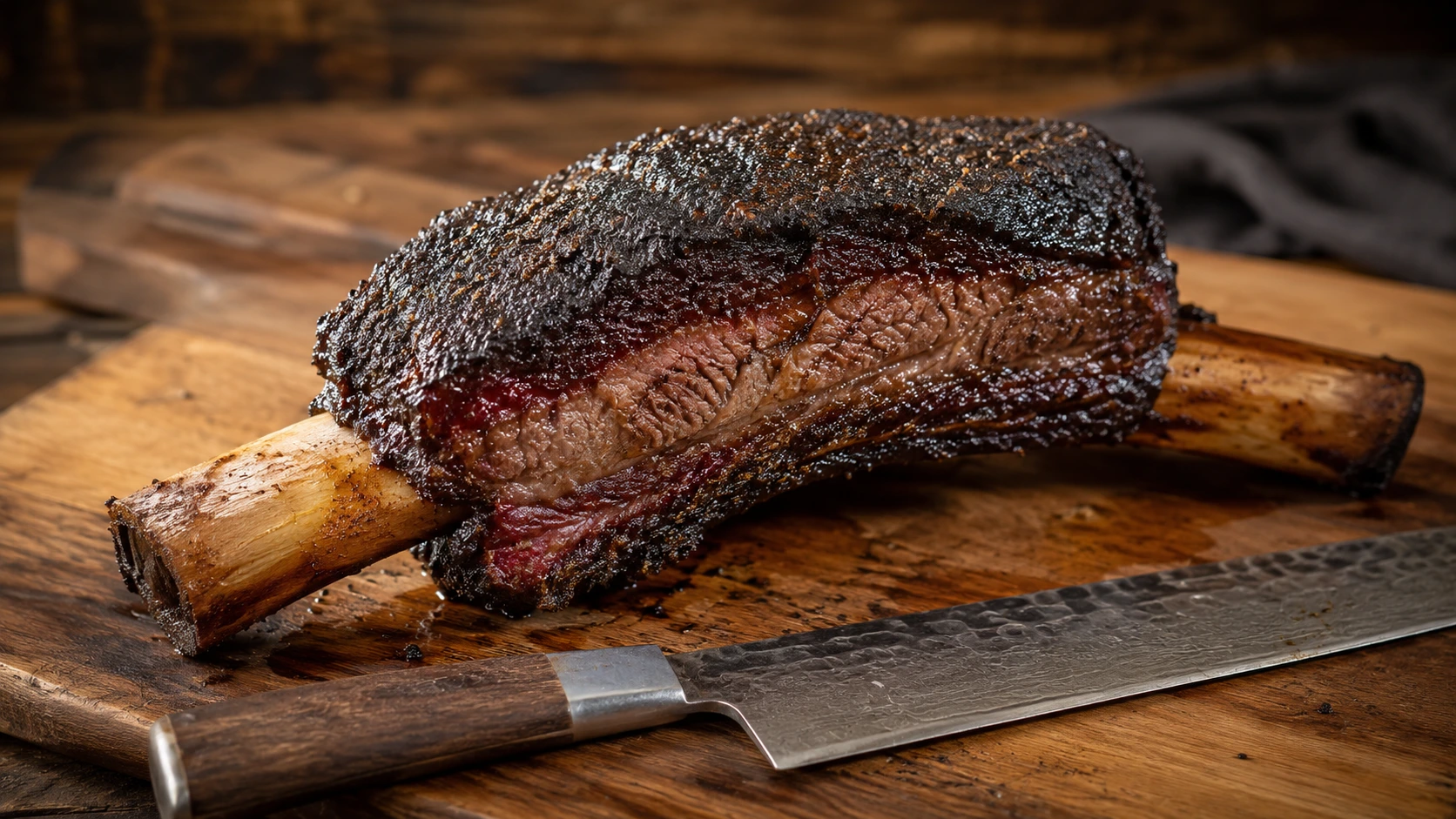
Photo by Gatorfan252525 (CC BY-SA 4.0), resized.
Beef plate ribs look intimidating, three or four bones the size of a forearm, but the technique underneath is close to brisket, just on a cut most people have never cooked before.
| Setting | Number |
|---|---|
| Pit temperature | 275°F |
| Pull at | 202°F internal, probe-tender |
| Cook time | 8 to 10 hours |
| Wood | Post oak |
| Rest | 45 minutes |
What makes plate ribs different from pork ribs
Beef plate ribs come from the short plate. Brisket is a separate adjacent primal immediately in front of it. Plate ribs still cook more like a mini brisket than like pork ribs: bigger cuts of meat, a longer cook, and a similar probe-tender endpoint rather than a bend test.
Pit temperature: hotter than brisket
Run the smoker at 275°F, noticeably hotter than brisket’s 225 to 250°F range. Beef plate ribs carry enough fat and mass to handle the higher heat, and it keeps a cook that could otherwise run very long to a more manageable 8 to 10 hours.
Doneness: 202°F and probe-tender
Pull plate ribs around 202°F internal, confirmed the same way as brisket: a probe should slide into the thickest part of the meat with almost no resistance. Temperature alone is a guide; the probe-tender feel is the real signal.
Wood and rest
Post oak matches the rich, fatty beef the same way it does on brisket. Rest plate ribs about 45 minutes before slicing between the bones; a shorter rest than brisket, but the same principle of letting juices settle before cutting.
For an optional complete cook-day plan, the Beef Plate Ribs Command Pack puts the prep, timeline, and decision points on paper.
Common beef plate rib questions
What temperature are beef plate ribs done at?
Around 202°F internal, confirmed by a probe sliding in with almost no resistance, the same test used on brisket.
Why are beef plate ribs called dino ribs?
Because of their size. A single plate rib bone with meat attached can look as large as a cartoon dinosaur bone, much bigger than a pork rib.
What pit temperature should I use for beef plate ribs?
275°F, hotter than the 225 to 250°F range used for brisket or pork butt. The extra heat suits the cut’s size and fat content and keeps the cook to about 8 to 10 hours.
Do beef plate ribs go through a stall?
Yes, the same evaporative cooling effect that affects brisket, usually around 160°F. Wait it out or wrap in butcher paper or foil to push through, same as brisket.
Related guides
Brisket Internal Temp: When Is Brisket Done?
Brisket is done around 203°F internal, but that number is only half the story. The target temp, why tenderness matters more, and the stall.
Read the guide ↗The Meat Stall Explained: Why Smoked Meat Stops Rising in Temperature
The stall is when a brisket or pork butt parks at the same temperature for hours. Why it happens, how long it lasts, and the three ways through it.
Read the guide ↗Best Brisket Rub Recipes: 3 to Try
Three brisket rub recipes: a classic Texas salt-and-pepper, a competition SPG blend, and a coffee bark version. Exact ratios, scaled for a 12 lb brisket.
Read the guide ↗