
BRISKET · DONENESS GUIDE
Brisket Internal Temp: When Is Brisket Done?
- Pit temperature
- 225–250°F
- Estimated cook
- 12–18 hrs
- Planned rest
- 2h
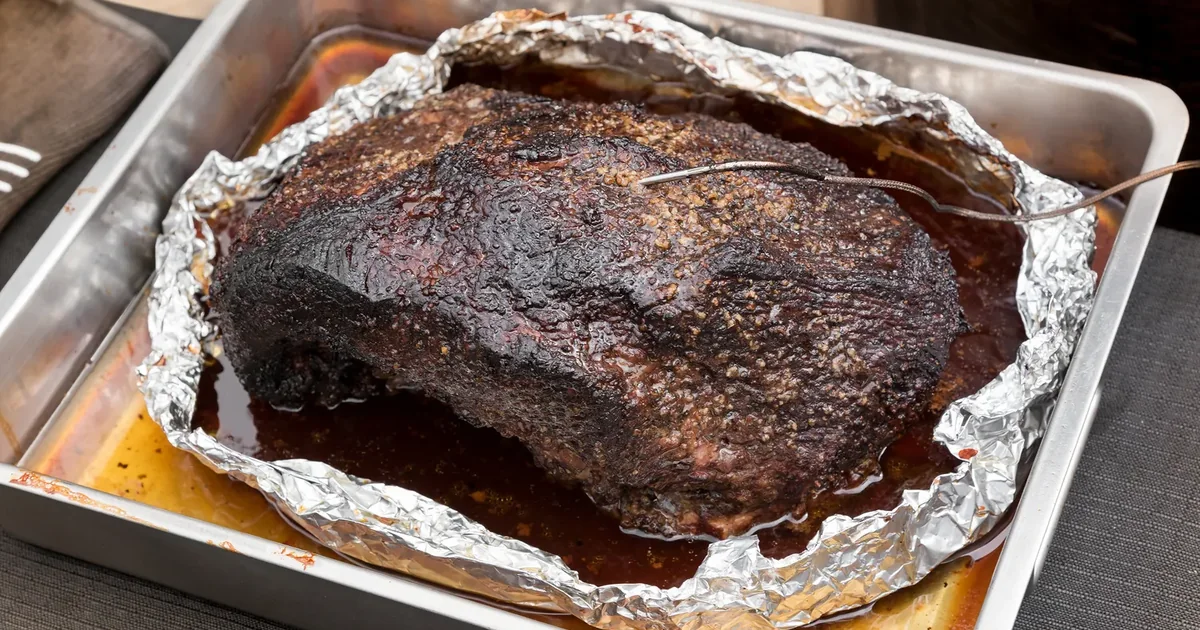
Most brisket questions start with temperature, but the target range only tells you when to check. Two briskets can finish at different temperatures, so learn to read the cut as well as the thermometer.
The short answer, and why it needs an asterisk
Aim to pull a brisket at about 203°F internal temperature measured in the thickest part of the flat. That figure is the industry shorthand for one thing: the point at which the tough connective tissue in a brisket has broken down enough to eat like barbecue instead of pot roast. But 203 is an average, not a law. One brisket probes tender at 198°F and another still feels tight at 205°F, because doneness is about collagen conversion, and collagen does not care what your thermometer reads.
Why brisket cooks to 203°F when steak is done at 130°F
A steak comes from a tender muscle that barely works during the animal’s life, so you cook it just enough to warm the center. Brisket is the opposite: it is the chest muscle of a steer, packed with collagen and connective tissue that make it inedibly tough at steak temperatures. The only way to fix that is time at heat. Somewhere north of 160°F, collagen slowly converts to gelatin, and it keeps converting the longer the meat sits in the 180 to 205°F range. That gelatin is what makes a slice bend, glisten, and pull apart cleanly.
So a brisket’s high finish temperature is not a safety number. The USDA minimum for a whole cut of beef is 145°F with a 3-minute rest, and a brisket passes that hours before it is worth eating. 203°F is a texture target: you are cooking well past safe and into tender on purpose. That distinction matters in both directions, because it is also why a poultry or ground-meat minimum cannot be treated as a suggestion the way 203°F can.
The stall: why your brisket stops at 160°F for hours
Partway through most brisket cooks the internal temperature climbs steadily, then flatlines somewhere around 150 to 170°F, often right near 160°F, and refuses to move for two, three, sometimes four hours. This is the stall. That pause comes from evaporative cooling: moisture leaving the brisket’s surface pulls heat away almost as fast as the fire adds it, much like sweat cooling your skin.
The stall breaks on its own once the surface dries out, but it can add hours you did not plan for. You have two choices: wait it out for a thicker bark, or wrap to push through.
Wrapping: the Texas crutch
Wrapping the brisket once it hits the stall traps that evaporating moisture and lets the temperature climb again. This is the Texas crutch, and the material you choose changes the result.
| Wrap | What it does | Best for |
|---|---|---|
| Butcher paper | Breathes slightly, holds bark, pushes past the stall | Most brisket cooks; the classic choice |
| Aluminum foil | Seals completely, fastest through the stall, softer bark | Speed and moisture when bark is not the priority |
| No wrap ("naked") | Thickest, hardest bark, longest cook | Cooks with time to spare and a bark-first goal |
Most people wrap in unwaxed butcher paper right as the stall sets in, usually around 160 to 170°F, trading a little bark for a faster, more predictable finish.
Point vs flat: two temps in one brisket
A whole packer brisket is two muscles. The flat is the lean, even section you slice; the point is the thick, fatty end that makes burnt ends. They do not finish at the same temperature. The flat is usually ready around 203°F, while the fattier point can go to 205 to 210°F and only get better, because it has more fat to render and collagen to convert. Always take your doneness reading in the flat, since that is the part that turns dry and chalky if you overshoot it.
When the point is good and the flat is dry, the first question is whether it is still tough or already crumbly, because those two failures need opposite moves. The dry brisket flat guide makes that call and covers what still helps at the cutting board.
Pit temperature and how long it takes
Run your smoker at a 225 to 250°F pit temperature, measured at grate level rather than off the dome gauge, which usually lies. At that range a whole packer brisket typically takes 12 to 18 hours depending on size, your smoker, and how long the stall drags. That is a wide window on purpose: never schedule a brisket to finish exactly at dinnertime. Give it a buffer, because a brisket that finishes early rests happily for hours. To turn that window into clock times for your dinner, use the brisket start time calculator. And if you want the whole cook mapped out on paper, the Beef Brisket Command Pack is a printable playbook for this cook.
Resting is not optional
Slicing a brisket straight off the smoker dumps its juices onto the cutting board and leaves the meat dry. Give it a recommended rest of at least an hour, with two hours as a quality target. If you need extra scheduling buffer after that, wrap it and use a dry insulated cooler only while a probe confirms the meat remains at or above 140°F. A cooler slows cooling but does not guarantee safe holding. The resting and holding guide covers how long that realistically lasts and what to do when it runs out.
A quick reference
| Stage | Target |
|---|---|
| Pit temperature | 225 to 250°F at the grate |
| Wrap point (stall) | Around 160 to 170°F internal |
| Flat, pull temp | ~203°F and probe-tender |
| Point (burnt ends) | ~205 to 210°F |
| Rest | At least 1 hour, up to 2+ |
Want the same numbers for every other cut on one page? See the smoker temperature chart, dial in your seasoning with the rub calculator, and once it hits temp, let the rest and hold calculator plan the rest and a safe hold to serving. The one tool worth buying well for brisket is a thermometer; the thermometer guide covers what matters.
Buying the brisket for that crowd is a separate calculation from cooking it, and the how much brisket per person guide covers cooked portions, raw buying weight, and sandwich math.
Cooking a smaller roast on the same principle? The chuck roast guide covers the cut cooks call poor man’s brisket.
Common brisket temperature questions
What internal temp is brisket done at?
Around 203°F in the flat is a useful place to start checking, but the probe gets the final say. The brisket is done when the probe slides in with almost no resistance. Some briskets turn tender a few degrees below that, others a few degrees above.
Can you overcook a brisket?
Yes. Past roughly 210°F in the lean flat, the muscle fibers dry out and the meat turns crumbly and chalky. The fatty point tolerates higher temperatures better than the flat.
Why is my brisket stuck at 160 degrees?
That is the stall, caused by evaporative cooling as moisture sweats off the surface. It is normal and can last several hours. Wrapping the brisket in butcher paper or foil pushes it through faster.
How long should brisket rest?
Rest a brisket at least one hour, with two hours as a quality target. If you need extra scheduling buffer, use a wrapped cooler hold only with a probe confirming at least 140°F; insulation alone does not guarantee safe holding.
What pit temperature is best for brisket?
A pit temperature of 225 to 250°F measured at grate level is the standard range for low-and-slow brisket. A whole packer takes roughly 12 to 18 hours in that range.
Sources and safety guidance
Food-safety numbers on this page come from published guidance, not from Pitwright’s own testing. Barbecue targets, timings, and technique are craft, and are described as such in the text.
- Safe Minimum Internal Temperature ChartUSDA Food Safety and Inspection ServiceMinimum safe internal temperatures: 145°F plus a 3-minute rest for whole beef, pork, and lamb; 145°F for seafood; 165°F for poultry; and label-specific ham cooking and reheating targets.
- Danger Zone (40°F to 140°F)USDA Food Safety and Inspection ServiceHot food held for later service stays at 140°F or above; food left between 40°F and 140°F is limited to 2 hours total, or 1 hour above 90°F ambient.
Related guides
How Long to Smoke a Brisket: Per-Pound Times That Add Up
Plan about 75 minutes per pound at 225 to 250°F: a 12 lb packer runs about 15 hours. Per-pound times, why small flats break the rule, and when to start.
Read the guide ↗The Meat Stall Explained: Why Smoked Meat Stops Rising in Temperature
The stall is when a brisket or pork butt parks at the same temperature for hours. Why it happens, how long it lasts, and the three ways through it.
Read the guide ↗Chuck Roast: The "Poor Man’s Brisket" Temp and Timing Guide
Chuck roast picks up brisket-like flavor at a fraction of the size and price. Smoke at 225 to 250°F to 205°F to shred or 200°F to slice.
Read the guide ↗