
BRISKET · TIMING GUIDE
How Long to Smoke a Brisket: Per-Pound Times That Add Up
- Pit temperature
- 225–250°F
- Estimated cook
- 12–18 hrs
- Planned rest
- 2h
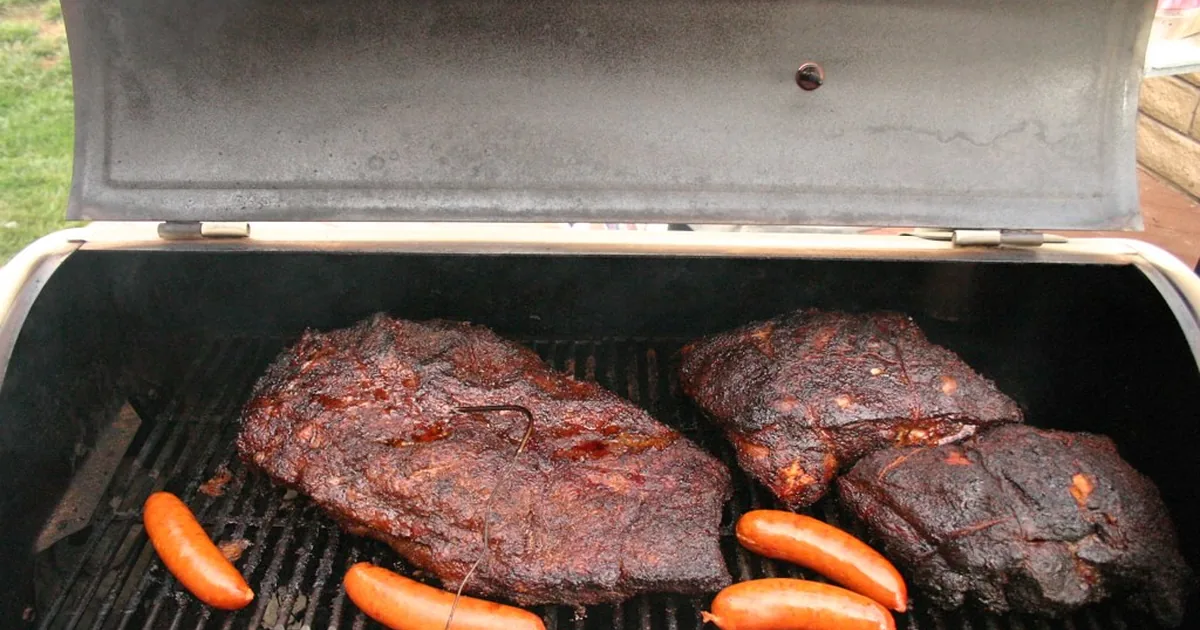
Photo by mikedevlin (CC BY-SA 2.0), resized.
When you are planning brisket, the real job is turning a rough cook-time range into a start time. Per-pound math gets shaky at the small and large ends, so leave room for the stall and the rest before you set the alarm.
The per-pound rule
At a steady 225 to 250°F pit, budget about 75 minutes per pound, an hour and a quarter for every pound of brisket. That is the planning basis Pitwright uses, and it puts a whole packer squarely inside the 12 to 18 hour window pitmasters quote. The table shows what the math works out to across common sizes.
| Brisket weight | Planned cook time at 225 to 250°F |
|---|---|
| 3 to 4 lb flat | About 5 hours (the small-flat floor) |
| 6 lb flat | About 7.5 hours |
| 8 lb | About 10 hours |
| 10 lb packer | About 12.5 hours |
| 12 lb packer | About 15 hours |
| 14 lb packer | About 17.5 hours |
| 16 lb and up | Plan 18 hours, the practical ceiling |
Two edges of that table deserve a closer look. A small flat does not keep shrinking with the math: even a 3 to 4 lb flat needs about 5 hours, because it still has to climb through the same temperature territory and break down the same connective tissue. And past roughly 14 lb the estimate flattens out at 18 hours: a bigger packer is mostly wider, not thicker, and thickness is what drives the finish.
Why the estimate is a window, not a promise
Somewhere near the middle of the cook, typically around 150 to 170°F internal, the brisket hits the stall: evaporative cooling flatlines the internal temperature for hours while the surface sweats. How long the stall lasts is the single biggest source of variance between two otherwise identical cooks. Wrapping in butcher paper or foil shortens it; humidity, wind, and how steady the pit holds all stretch or shrink it. That is why the estimate is always a range. And when the window has already narrowed mid-cook, the Cook Rescue calculator reads your current temperature against your serving time. If the cook is already behind, see the brisket-taking-too-long guide for the next move at the pit.
From cook time to start time
The cook time is only half the schedule. Work backward from when you want to eat: subtract the rest, at least an hour and ideally two, then the cook itself, then the time your pit needs to come up to temperature with clean smoke, which ranges from about 20 minutes on a pellet grill to well over an hour on an offset. For a 12 lb packer served at 5 PM, that math regularly lands the fire at 2 or 3 in the morning. The brisket start time calculator runs the whole backward chain for your weight, smoker type, and serving time, including the wrap window. And if you want the whole cook mapped out on paper, the Beef Brisket Command Pack is a printable playbook for this cook.
The seasoning has its own guide in the brisket rub recipes, and if other cuts are sharing the pit that day, the multi-meat timing plan fits them onto one fire.
Running hotter to run shorter
A hotter pit shortens the cook and still lands tender meat. Plenty of good briskets get cooked above 250°F, especially wrapped ones, at some cost in how much smoke the bark takes on before the wrap goes on. The per-pound numbers in this guide assume the standard 225 to 250°F range, so if you run hotter, treat them as an upper bound rather than a target.
Time tells you when to check, not when to pull
However carefully you plan, the clock never decides doneness. A brisket is done when a probe slides into the flat with almost no resistance, which usually happens around 203°F internal but can land a few degrees either side. The full doneness picture, including the point-versus-flat difference and resting, is in the brisket internal temp guide.
Common brisket timing questions
How long does a brisket take per pound?
Plan about 75 minutes per pound at a steady 225 to 250°F pit temperature. A 12 lb packer plans to about 15 hours. Treat it as a planning window, not a promise: the stall can add hours, so build in a buffer.
How long does a 12 lb brisket take to smoke?
About 15 hours at 225 to 250°F, using the 75 minutes per pound planning basis. Start it the night before an evening meal, plan a 1 to 2 hour optional buffer beyond the recommended rest, and monitor any wrapped hold at or above 140°F. A cooler alone does not guarantee safe holding.
How long does a small brisket flat take?
A 3 to 4 lb flat needs about 5 hours, more than straight per-pound math suggests. It still has to climb the same temperature range and soften the same connective tissue as a bigger cut, so 5 hours is the practical floor.
Can I smoke a brisket hotter to make it faster?
Yes. Running above 250°F, especially after wrapping, shortens the cook and can still finish tender. The tradeoff is less time in smoke before the wrap. The 75 minutes per pound figure assumes 225 to 250°F, so treat it as an upper bound if you run hotter.
When should I start a brisket for dinner?
Work backward from serving time: subtract a 1 to 2 hour rest, the cook time, and the time your pit needs to come to temperature. For a full packer served in the evening, that usually means lighting the fire in the very early morning or running overnight.
Related guides
Brisket Internal Temp: When Is Brisket Done?
Brisket is done around 203°F internal, but that number is only half the story. The target temp, why tenderness matters more, and the stall.
Read the guide ↗The Meat Stall Explained: Why Smoked Meat Stops Rising in Temperature
The stall is when a brisket or pork butt parks at the same temperature for hours. Why it happens, how long it lasts, and the three ways through it.
Read the guide ↗