
TECHNIQUE · THE STALL
The Meat Stall Explained: Why Smoked Meat Stops Rising in Temperature
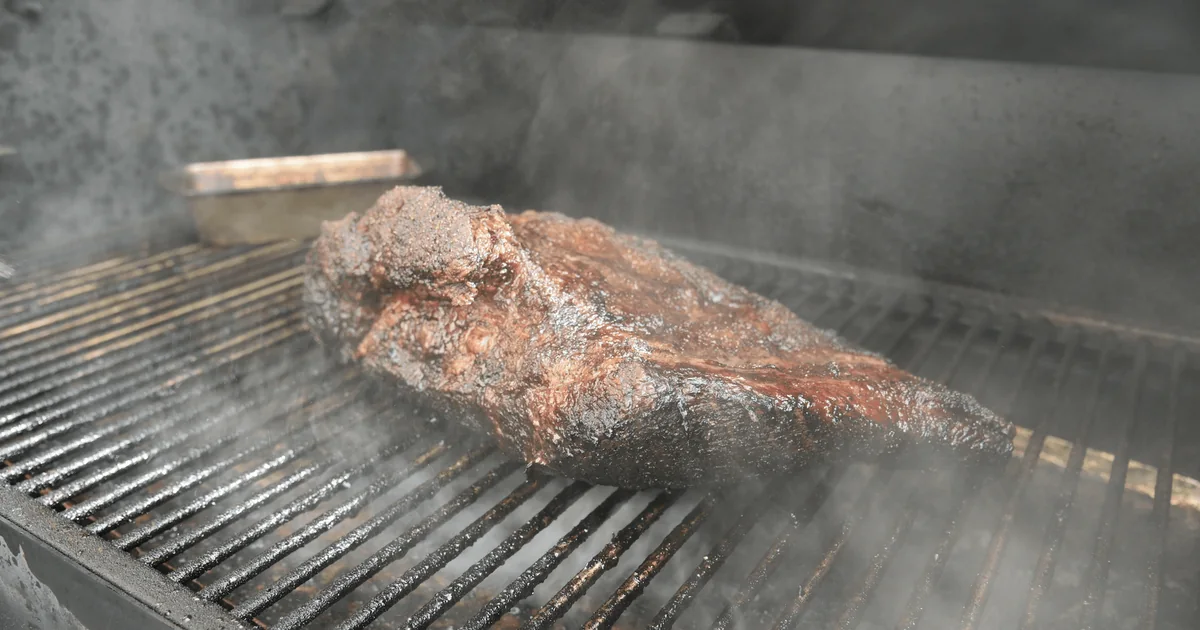
A first brisket can look stuck when the temperature climbs for hours and then stops. That plateau is normal evaporative cooling, and you have three practical ways to handle it.
What the stall is
The stall is a long plateau in internal meat temperature during a low-and-slow cook, most commonly somewhere between 150 and 170°F, often centered right around 160°F. The temperature climbs normally for the first few hours, then flattens out and barely moves for two to four hours, sometimes longer on a big brisket. It happens on brisket and pork butt most noticeably because they cook longest, but any large cut held at low pit temperatures for hours can stall.
Why it happens: evaporative cooling
As the meat heats up, moisture works its way to the surface and evaporates into the smoker. Evaporation is a cooling process, the same reason sweat cools your skin on a hot day. Early in the cook this effect is small next to the heat coming from the fire, so the internal temperature keeps climbing. But once enough surface moisture is evaporating, the cooling effect roughly matches the heat coming in, and the internal temperature holds nearly flat until the surface finally dries out enough to break the balance.
How long the stall lasts
There is no fixed number. A stall can run anywhere from thirty minutes to five or six hours depending on the cut size, the humidity in your smoker, ambient weather, and how much surface moisture the meat is holding. This unpredictability is why brisket and pork butt cook times are given as wide ranges rather than a single number: the stall is the biggest variable, not the fire. When a cook is already underway and dinner has a fixed time, the Cook Rescue calculator compares where you are against the clock and tells you whether to ride it out or wrap.
Three ways to handle it
| Approach | What happens | Trade-off |
|---|---|---|
| Ride it out (naked) | No intervention; the stall breaks on its own once the surface dries | Thickest, darkest bark, but the longest and least predictable finish time |
| Wrap in butcher paper | Paper holds in some moisture while still letting the meat breathe a little | Pushes through faster with a firm bark, the most common middle ground |
| Wrap in foil | Fully seals in moisture and steams the meat | Fastest through the stall, but softens the bark the most |
Wrapping right as the stall sets in, typically around 160 to 170°F internal, is often called the Texas crutch. It works because sealing or partially sealing the surface stops evaporation from carrying heat away, letting the temperature climb again. See the full breakdown in butcher paper vs foil if you are deciding which wrap to use.
Does spritzing help or hurt?
Spritzing helps the bark, not the stall. Water, apple juice, or vinegar on the surface between checks adds moisture back and can help the bark develop color and texture. But it does not shorten the plateau, and it can extend it slightly by giving the surface more moisture to evaporate. Spritz for bark, not to fight the stall.
What not to do
- Do not crank the pit temperature. Jumping from 225°F to 325°F to force through the stall dries out the exterior and risks a burnt, bitter bark before the interior catches up.
- Do not open the lid repeatedly to check. Every open drops chamber temperature and adds cook time without doing anything to shorten the stall itself.
- Do not panic and pull it early. A stalled brisket at 165°F is not done. It needs to keep cooking well past the stall, generally to around 203°F, before the connective tissue breaks down.
The stall across different cuts
See how this plays out for the cuts most affected by the stall: brisket internal temp and pork butt internal temp. Ribs stall less noticeably since they cook faster and carry less mass, but the same evaporative principle still applies.
When a pork butt is stuck and dinner is close, the pork butt stall rescue covers the pit checks and the wrap decision in order.
Common questions about the stall
How long does the meat stall last?
The stall typically lasts two to four hours, but it can run anywhere from thirty minutes to five or six hours depending on the cut size, humidity, weather, and surface moisture. It is unpredictable by nature.
What temperature does the stall happen at?
Most stalls happen somewhere between 150 and 170°F internal temperature, often centered around 160°F. The exact temperature varies by cut and cook conditions.
Should I wrap my meat during the stall?
Wrapping in butcher paper or foil once the stall sets in traps moisture and lets the internal temperature climb again, shortening the cook. Leaving it unwrapped takes longer but builds a thicker, darker bark.
Why does my smoker temperature stay the same but the meat does not rise?
That is expected. The stall is caused by evaporative cooling at the meat’s surface, not by a drop in pit temperature. As long as your pit thermometer still reads 225 to 250°F at grate level, the fire is fine.
Does spritzing stop the stall?
No. Spritzing adds moisture to the surface for bark development, but it does not shorten the stall and can add a small amount of time to it by giving the surface more moisture to evaporate.
Related guides
Brisket Internal Temp: When Is Brisket Done?
Brisket is done around 203°F internal, but that number is only half the story. The target temp, why tenderness matters more, and the stall.
Read the guide ↗How Long to Smoke a Brisket: Per-Pound Times That Add Up
Plan about 75 minutes per pound at 225 to 250°F: a 12 lb packer runs about 15 hours. Per-pound times, why small flats break the rule, and when to start.
Read the guide ↗Butcher Paper vs Foil: Which Wrap Wins the Texas Crutch
Butcher paper breathes and protects bark; foil seals completely and cooks fastest. When to reach for each, and when to skip the wrap entirely.
Read the guide ↗Pork Butt Finish Temp: When Is Pulled Pork Done?
The pork butt finish temp for pulled pork is about 205°F. Learn the pit temperature, probe and bone tests, stall, timing, and rest.
Read the guide ↗