
Grounded in the cut
Guidance is specific to each cut. A pork shoulder and a chicken thigh need different targets.
FREE BBQ GUIDES AND COOK-DAY TOOLS
Need the target temperature for a cut, or a timing range you can plan around? The guides and free cook-day tools are here when you need them. No account required.
Tools and charts use one shared set of cut data. Guides explain when the number is useful and when the meat makes the final call.
Start with the first-cook guide, then cover grill setup and thermometers.
Learn how to run your first smoke: choose a forgiving cut, hold 225–250°F at grate level, expect the stall, check doneness, and rest before serving.
Read the guide ↗Set up a two-zone fire and use your charcoal or gas grill for an indirect smoke.
Read the guide ↗Check meat doneness and grate temperature without relying on the lid gauge.
Read the guide ↗Guidance is specific to each cut. A pork shoulder and a chicken thigh need different targets.
Doneness comes from internal temperature and a tenderness test, not a timer. Food-safety minimums come from published USDA guidance.
Cook times are estimates given as ranges, because cut shape, weather, and the piece of meat move them by hours. Each guide states the range and what drives it.
The calculators and chart read from the same cut data. Guides add the context and tenderness cues that a table cannot.
Doneness temps, timing, the stall, wrapping, and resting for the cuts you smoke.
Read the guides ↗Plan the cookout, check a slipping schedule, hold an early finish safely, or use a focused calculator. No account, nothing to install.
Use the tools ↗Practical gear notes: what makes a difference at the pit, what can wait, and what to look for.
See the gear notes ↗Each Command Pack covers one cut from shopping list to slicing: prep, timing, target temperatures, and what to do when the cook goes off-script. 6 packs in the series.
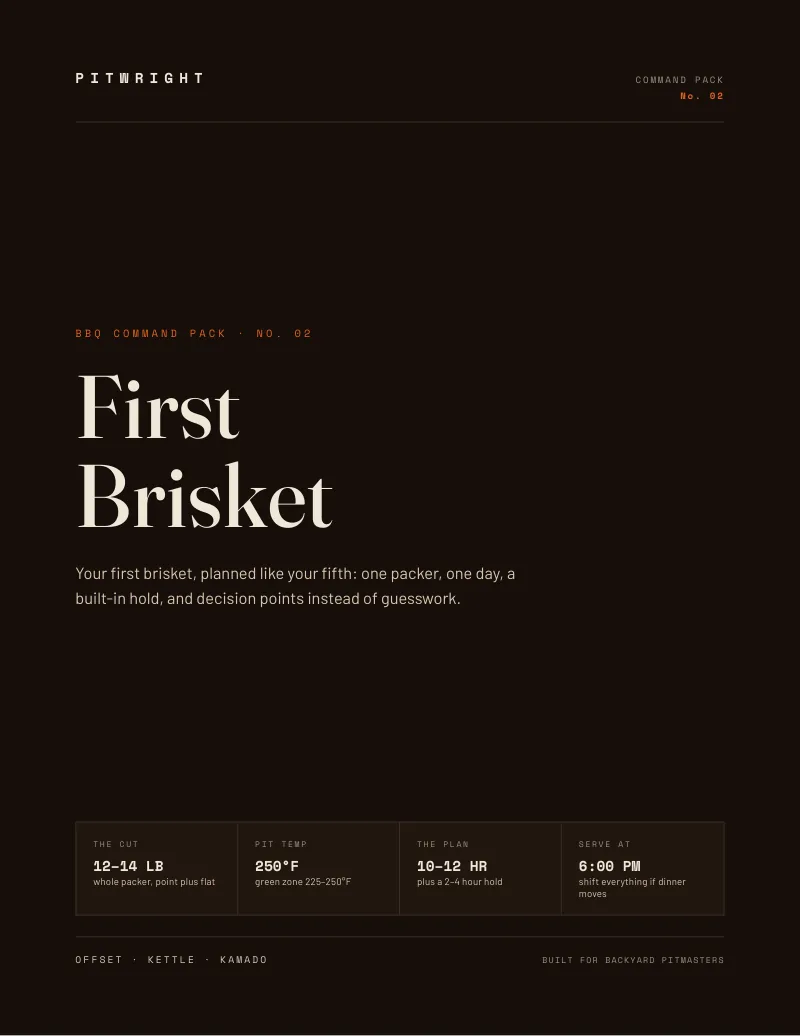
NO. 02 · BEEF
Plan a whole packer brisket from night-before prep through the hold and final slicing.