
BEGINNERS · GEAR BASICS
Do You Need a Thermometer to Smoke Meat?
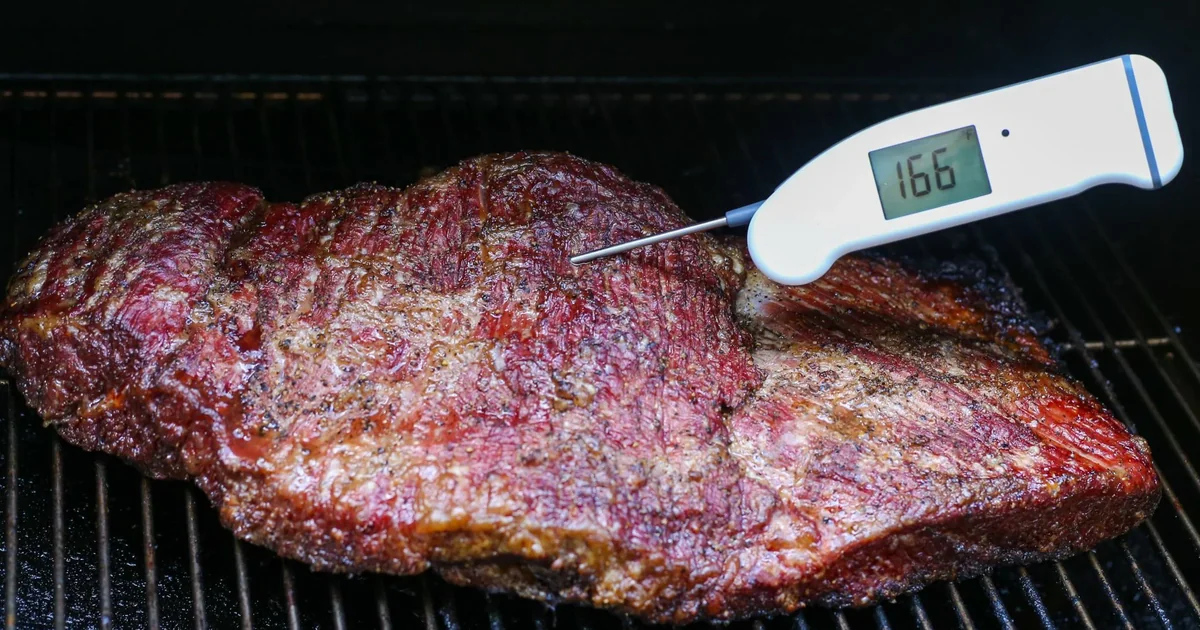
You can smoke meat without a thermometer, but you are guessing at both food safety and doneness. The lid gauge shows roughly what is happening in the cooking chamber. A meat thermometer shows what is happening in the food.
Why time alone does not work
Every cook time you read, including the ones on this site, is a range built from typical conditions, so treat it as an estimate for your specific cook. Weather, how well your smoker holds temperature, the exact size and fat content of your cut, and the stall all shift the real finish time by hours in either direction. Cooking a brisket for exactly 12 hours because a chart said so, with no thermometer to confirm it, is a coin flip.
Why the smoker’s built-in gauge is not enough
Almost every smoker ships with a dome or lid thermometer, and it is measuring the wrong thing for two reasons. First, it reads air temperature at the top of the chamber, often a foot or more above the grate where your food sits, and heat stratifies inside a smoker the same way it does in a room. Second, that is the pit temperature, not the meat temperature. Even a perfectly accurate dome gauge reports only the pit temperature; it cannot show whether the food inside is done.
What a thermometer gets you
- Food safety. Poultry, pork, and beef all have real minimum safe temperatures. Color and texture alone cannot confirm you have reached them.
- The right pull point. Steak is done at a very different number than pulled pork. A reading is how you tell which zone you are in.
- Recognize the stall. When the number holds steady, you can see that the stall is underway and the cook is behaving normally.
- Consistency across cooks. A logged number is repeatable next time; a memory of "it looked about right" is not.
If a probe has been dropped or its readings seem wrong, check the thermometer in an ice bath before trusting it on the next cook. The check compares it with a known temperature; whether you can adjust it depends on the model.
Instant-read vs leave-in: which one do you need
| Type | What it is for | Good first purchase? |
|---|---|---|
| Instant-read | A quick spot check in a few seconds, moved between several spots in the cut | Yes, buy this first |
| Leave-in probe | Stays in the meat and shows live readings without opening the lid; temperature history requires a model that records readings | A strong second purchase once you are cooking regularly |
| Wireless / app-connected | Convenience layer on top of a leave-in probe | Optional; a wired probe is more dependable to learn on |
For a full breakdown of types, what to look for, and what to avoid, see the thermometer guide. If you are outfitting a first smoker from scratch, the starter kit guide covers everything else you need alongside it.
The comparison between the two shapes is in the instant-read versus leave-in guide.
Common thermometer questions
Can I smoke meat without a thermometer?
You can, but you will be guessing at both food safety and doneness. A basic instant-read thermometer clears up most of that without costing much.
Is the thermometer on my smoker lid good enough?
No, it measures air temperature at the top of the chamber, not the temperature at grate level or inside the meat. It is useful for a rough sense of pit temperature but cannot show doneness.
What is the difference between a meat thermometer and a smoker thermometer?
A smoker or pit thermometer measures the cooking environment. A meat thermometer measures the food itself. You need both readings for a properly monitored cook; separate, appropriately rated probes on one multi-probe unit can provide them.
Should I buy an instant-read or a leave-in thermometer first?
Start with an instant-read thermometer. It is the cheaper, more versatile first purchase. A leave-in probe is a strong second buy once you are cooking regularly and want live readings without opening the lid. Temperature history requires a model that records readings.
Related guides
How to Use a Smoker for the First Time
Learn how to run your first smoke: choose a forgiving cut, hold 225–250°F at grate level, expect the stall, check doneness, and rest before serving.
Read the guideBrisket Internal Temp: When Is Brisket Done?
Brisket is done around 203°F internal in the flat, when a probe slides in like butter. Point vs flat temps, the 160°F stall, wrapping, and a 225 to 250°F pit.
Read the guidePork Butt Finish Temp: When Is Pulled Pork Done?
Pork butt is done for pulled pork at about 205°F internal. The pit temperature, probe and bone tests, the stall, timing, and rest.
Read the guide