
PULLED PORK · DONENESS GUIDE
Pork Butt Finish Temp: When Is Pulled Pork Done?
- Pit temperature
- 225–250°F
- Estimated cook
- 10–16 hrs
- Planned rest
- 1h 30m
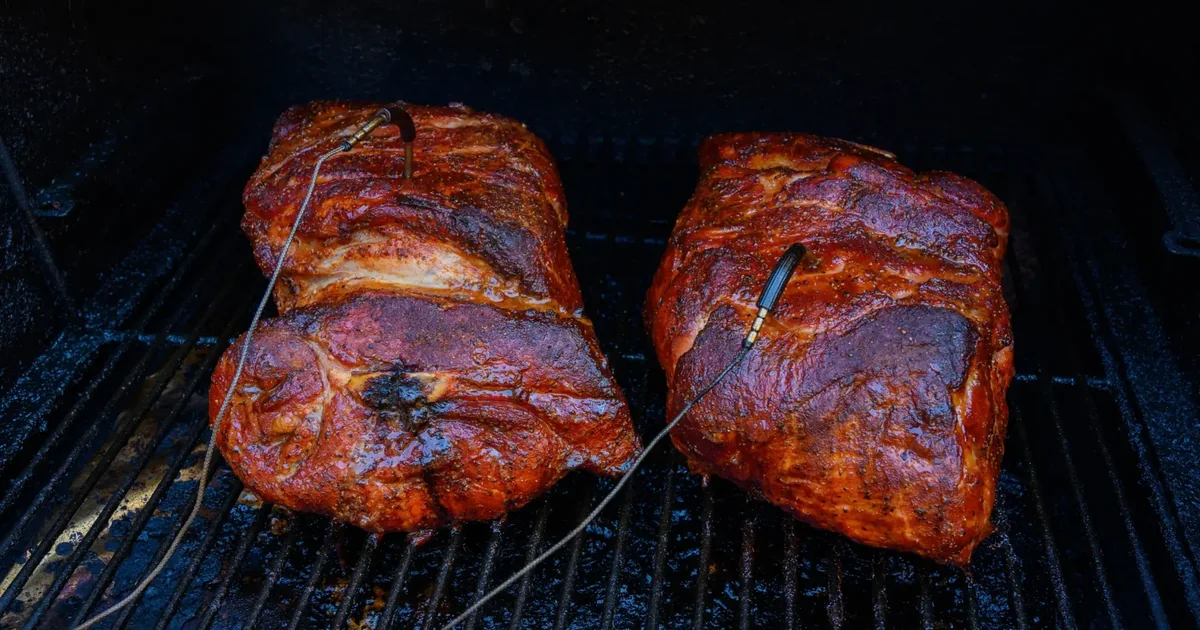
Pork butt is the most forgiving big cut in barbecue when you take it far enough. Stop at a food-safe temperature for sliceable roast; take it further and it shreds into pulled pork. Use temperature and texture to decide when to pull.
Safe vs done vs pull-apart tender
There are three different temperatures people mean when they say pork is "done," and mixing them up is the number-one pulled pork mistake.
| Temperature | What you get |
|---|---|
| 145°F | USDA-safe for pork, but tough and sliceable, not pullable |
| 165°F | The stall zone; still firm, connective tissue not yet rendered |
| ~205°F | Collagen converted to gelatin over time, probe-tender, the bone pulls clean: pulled pork |
145°F is a safety number for a pork chop or tenderloin. A pork butt is loaded with collagen and fat that only break down with long exposure to heat, so for pulled pork you deliberately blow past safe and cook all the way to about 205°F internal. That extra 60 degrees is the whole difference between roast and barbecue.
Why 205°F and not higher or lower
Below roughly 195°F, a lot of the connective tissue in the shoulder is still intact, and the meat resists shredding, tearing into chunks instead of strands. Collagen gradually converts to gelatin through time and heat; around 200 to 205°F is a checkpoint to start judging the probe and bone feel, not a switch. Pork butt is forgiving on the high end too: because it is so fatty and well-marbled, a few degrees past 205 rarely hurts it the way overshooting a lean brisket flat does.
The stall hits pork too
Just like brisket, a pork butt usually stalls, with the internal temperature parking around 160°F for a couple of hours while surface moisture evaporates and cools the meat. It is normal. You can wait it out for a thicker bark, or wrap in foil or butcher paper once the bark looks right, typically around 160 to 170°F, to power through the stall and shorten the cook. See the meat stall explained for the full mechanics, and butcher paper vs foil for which wrap to reach for.
Pit temperature and cook time
Run the smoker at 225 to 250°F at grate level. A whole bone-in pork butt, usually 8 to 10 pounds, takes roughly 10 to 16 hours, and like brisket the stall makes the finish time hard to predict. A useful rough planning figure is about 1.5 to 2 hours per pound at 225°F, but treat that as a starting estimate and cook to tenderness, not the clock. Hickory or apple wood are the classic pairings for pork shoulder. For the buying decision before this timing window, compare bone-in and boneless pork shoulder. If you want the whole cook mapped out on paper, the Pork Butt Command Pack is a printable playbook for this cook.
If it finishes early, the Rest & Hold Calculator helps plan the rest and hold through serving time.
Holding a finished butt for hours has its own limits, which the pulled pork done early guide covers.
Rest before you pull
Resting matters here too. Give the butt at least 60 to 90 minutes wrapped after it comes off the heat so the juices redistribute and the last of the connective tissue relaxes. Pulling it straight off the smoker steams your hands and loses moisture to the board. When you do pull, save any liquid from the wrap and mix it back into the meat; it is pure flavor.
If it reads done and still will not pull apart, the doneness checks page walks through probe placement and the bone test.
Quick reference
| Stage | Target |
|---|---|
| Pit temperature | 225 to 250°F at the grate |
| Wrap point (stall) | Around 160 to 170°F internal |
| Pull temp | ~205°F, probe-tender, bone slides clean |
| Rough time | 10 to 16 hours for a whole butt |
| Rest | At least 60 to 90 minutes, wrapped |
See every cut’s numbers together on the smoker temperature chart, scale a Memphis or Carolina rub to your shoulder with the rub calculator, and if you are cooking for a crowd, size how many butts to buy with the meat per person calculator.
Buying the pork for that crowd is a separate calculation from cooking it, and the how much pulled pork per person guide covers cooked portions, raw buying weight, and the sandwich and slider cases.
Common pork butt temperature questions
What temperature is pork butt finished?
Take a pork butt to about 205°F internal temperature for pulled pork. Hours of heat gradually convert collagen to gelatin; use 205°F as a checkpoint, then finish when the meat probes tender and the bone pulls clean. Anything much below 195°F tends to shred into chunks instead of strands.
Is pork done at 145 or 205?
Both, for different results. 145°F is the USDA-safe temperature for sliceable pork like chops. For pulled pork you cook a fatty pork butt all the way to about 205°F so the connective tissue breaks down and the meat shreds.
Can you overcook a pork butt?
It is hard to. Pork butt is fatty and forgiving, so a few degrees past 205°F rarely hurts it. Pushing far beyond that, or holding it too hot for too long, can eventually dry it out, but there is a wide comfortable window.
How long does a pork butt take to smoke?
A whole bone-in pork butt takes roughly 10 to 16 hours at 225 to 250°F, or about 1.5 to 2 hours per pound at 225°F as a rough planning figure. The stall makes exact timing unpredictable, so cook to tenderness.
How long should pulled pork rest?
Rest a pork butt at least 60 to 90 minutes, wrapped, before pulling. For a longer hold, keep it wrapped in an insulated cooler where it stays above serving temperature for several hours.
Sources and safety guidance
Food-safety numbers on this page come from published guidance, not from Pitwright’s own testing. Barbecue targets, timings, and technique are craft, and are described as such in the text.
- Safe Minimum Internal Temperature ChartUSDA Food Safety and Inspection ServiceMinimum safe internal temperatures: 145°F plus a 3-minute rest for whole beef, pork, and lamb; 145°F for seafood; 165°F for poultry; and label-specific ham cooking and reheating targets.
Related guides
The Meat Stall Explained: Why Smoked Meat Stops Rising in Temperature
The stall is when a brisket or pork butt parks at the same temperature for hours. Why it happens, how long it lasts, and the three ways through it.
Read the guide ↗Brisket Internal Temp: When Is Brisket Done?
Brisket is done around 203°F internal, but that number is only half the story. The target temp, why tenderness matters more, and the stall.
Read the guide ↗How Long to Smoke Ribs (Baby Back, St. Louis, and Spare)
Baby back ribs smoke in about 4 to 5 hours, spare or St. Louis in 6 to 7, at 225 to 250°F. The timing by cut, the 3-2-1 method, and how to test for done.
Read the guide ↗