
RIBS · TIMING GUIDE
How Long to Smoke Ribs (Baby Back, St. Louis, and Spare)
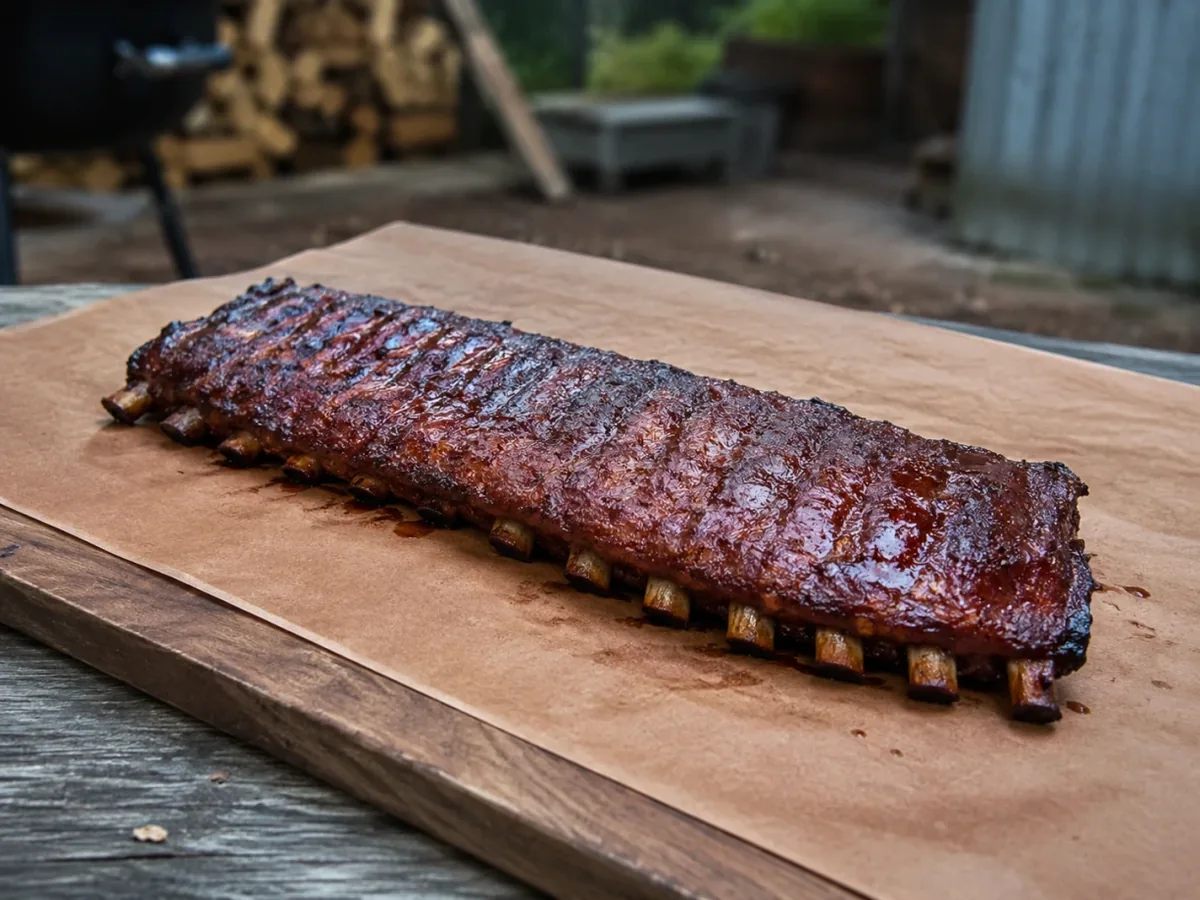
Photo by akpoff (CC BY 2.0), resized.
Ribs are the cut people most want to cook by a timer, and the one where the timer lies most often. Timing gives you a window; the meat tells you when it is done. This guide covers both for each rib cut.
Timing by cut
Rib timing depends more on which rack you bought than on anything else. Baby backs are smaller and leaner and cook fastest. Spare ribs and their trimmed cousin, St. Louis cut, are meatier and take longer. These ranges assume a steady 225 to 250°F pit.
Beef plate ribs are a different cook on a much longer clock, covered in the beef plate ribs guide, and the baby back versus spare comparison covers the rack choice at the store.
| Rib type | Cook time | Doneness signal |
|---|---|---|
| Baby back ribs | 4 to 5 hours | Bend test / toothpick-tender, around 198°F |
| St. Louis ribs | 6 to 7 hours | Toothpick-tender, around 203°F |
| Spare ribs (full) | 6 to 7 hours | Toothpick-tender, around 203°F |
Once you know the rib window, use the Cookout Planner to work backward from dinner and fit the rest of the meal around it.
Ribs are a feel cut, not a temp cut
Unlike a brisket or a pork shoulder, ribs are thin and cook fast, so a single internal temperature reading is hard to take cleanly and easy to misread near a bone. Pitmasters judge ribs by feel instead, and two tests do the job.
The bend test
Pick up the rack with tongs from one end. When ribs are done, the rack droops and bows, and the surface meat between the bones cracks slightly. If it stays stiff and flat, it needs more time. If it nearly falls apart in the tongs, you have gone past clean-bite and into mushy.
If the rack is still stiff and dinner is close, the ribs timing rescue guide covers what buys time without wrecking the texture.
The toothpick test
Slide a toothpick or thin probe into the meat between two bones. Done ribs offer almost no resistance, the way a toothpick slides into warm butter. If you do want a number, that feel usually lands around 198°F for baby backs and about 203°F for meatier St. Louis and spare ribs. Take the reading in the thick meat between bones, never touching one.
The 3-2-1 method (and 2-2-1 for baby backs)
The most popular repeatable approach for spare ribs is 3-2-1, a three-phase schedule that builds bark, then tenderizes, then sets the glaze:
- 3 hours unwrapped on the smoke at 225 to 250°F, to build color and bark.
- 2 hours wrapped in foil, often with a little liquid or a pat of butter and brown sugar, to reduce evaporative cooling, trap moisture, and speed tenderization.
- 1 hour unwrapped again, sauced or dry, to firm the surface and set a glaze.
For leaner, faster baby backs, shorten the wrapped and finishing phases to 2-2-1, because a full 3-2-1 tends to overcook them into fall-off-the-bone mush. Competition cooks usually stop just short of that, aiming for a clean bite that leaves a bite mark rather than sliding off the bone entirely.
A rack that went too far is often still usable, but only if the next move matches the problem. Soft, fall-apart meat and dry, chewy meat need opposite fixes, and the overcooked ribs guide covers both.
If you want the whole 3-2-1 schedule mapped out on paper, the St. Louis Ribs Command Pack is a printable playbook for this cook.
Pit setup that makes timing predictable
- Hold 225 to 250°F. A steady pit is the single biggest factor in ribs finishing on schedule. Measure at grate level, not the dome gauge.
- Pull the membrane. Remove the thin silverskin from the bone side so rub and smoke reach the meat and the rack stays tender.
- Keep the lid closed. Every peek drops the temperature and adds time. Look when there is a reason to, not out of nerves.
- Cherry, hickory, or apple are classic rib woods, adding color and a balanced smoke without overpowering pork.
Rest, then cut
Ribs need only a short rest, roughly 15 to 20 minutes, enough to let the surface set so a knife glides between the bones without shredding the meat. Cut between the bones, bone side up so you can see where to slice.
Dialing in a rub for the rack you bought? The rub calculator scales any of the built-in rib rubs to your exact weight, and the smoker temperature chart lists every cut on one page. New to ribs? The starter kit guide covers the short list of gear that matters.
Common rib timing questions
How long do ribs take to smoke at 225?
At 225 to 250°F, baby back ribs take about 4 to 5 hours and meatier St. Louis or spare ribs take about 6 to 7 hours. Start checking for doneness at the early end of the range.
What temp are ribs done at?
Ribs are best judged by feel rather than a single number, but the toothpick-tender feel usually lands around 198°F for baby backs and about 203°F for St. Louis and spare ribs, measured in the meat between the bones.
What is the 3-2-1 method for ribs?
It is a three-phase schedule for spare ribs: 3 hours unwrapped on the smoke, 2 hours wrapped in foil to tenderize, and 1 hour unwrapped to set the glaze. For leaner baby back ribs, use 2-2-1 so they do not overcook.
Should ribs fall off the bone?
Not quite. Fall-off-the-bone ribs are slightly overcooked. Properly done ribs hold together when lifted and give a clean bite that leaves a mark, tender with a little pull.
Do I need to wrap ribs?
No, but wrapping reduces evaporative cooling, traps moisture, and speeds tenderization. Unwrapped ribs develop a firmer bark and take longer. The 3-2-1 and 2-2-1 methods build a wrapping phase into the schedule.
Related guides
The 3-2-1 Ribs Method: Timeline, Why It Works, When to Skip It
The 3-2-1 rib method: 3 hours of smoke, 2 wrapped, 1 to set the glaze at 225 to 250°F. Why it suits spare ribs, and why baby backs need 2-2-1 instead.
Read the guide ↗Brisket Internal Temp: When Is Brisket Done?
Brisket is done around 203°F internal, but that number is only half the story. The target temp, why tenderness matters more, and the stall.
Read the guide ↗Pork Butt Finish Temp: When Is Pulled Pork Done?
The pork butt finish temp for pulled pork is about 205°F. Learn the pit temperature, probe and bone tests, stall, timing, and rest.
Read the guide ↗