
TECHNIQUE · COOK-DAY TIMING
Smoking Multiple Meats: One Timeline, Everything Ready Together
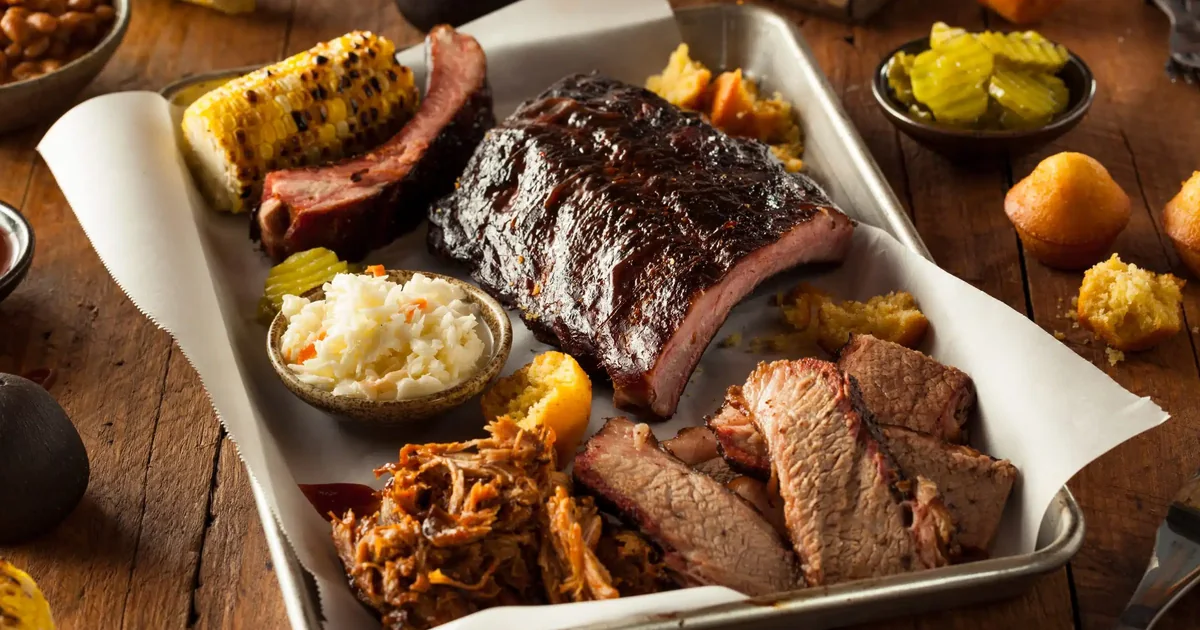
Cooking two cuts for one meal means one timeline with two start times. Start from when the meal is served and walk each cut backward to its own fire. Build the schedule with the worked examples below.
The one rule: work backward from serving time
Start a multi-cut plan with the time you want to eat. For each cut, subtract the rest, cook time, and fire buildup. The longest cook starts first, while quick cuts go on later. Aim each cut at a shared rest-and-hold window before the meal.
This is the backward chain the brisket start time calculator runs for one cut. Doing two or three at once is the same math, once per cut, sharing the pit, and the cookout planner does that: it lines several cuts up backward from one serving time onto a single timeline. Before you plan the timing, the meat per person calculator sizes how much of each cut to buy for the headcount.
The assumptions these schedules use
Every schedule below uses the same planning estimates as the rest of these guides, all at a 225 to 250°F pit temperature measured at grate level. These are not guarantees: two pork butts of the same weight can finish two hours apart, so cook to tenderness and let the hold absorb the difference.
| Cut | Planning time | Rest | Doneness |
|---|---|---|---|
| Pork butt (8 to 9 lb) | 10 to 16 hrs (~1.5 to 2 hr/lb) | 60 to 90 min | ~205°F, bone pulls clean |
| Brisket (10 to 14 lb) | 12 to 18 hrs (~75 min/lb) | 1 to 2 hrs | ~203°F, probe-tender |
| St. Louis / spare ribs | 6 to 7 hrs | 15 to 20 min | Bend and toothpick tender |
| Baby back ribs | 4 to 5 hrs | 15 min | Bend and toothpick tender |
| Wings | 2 to 2.5 hrs | 5 min | 165°F safe, 175 to 185°F for crisp skin |
Schedule 1: ribs and pulled pork, ready at 6 PM
For pork butt and ribs, the longer pork cook sets the fire time. Put the ribs on mid-morning so they finish near the same rest window. Plan the pork butt to finish early, then hold it safely while the ribs catch up.
| Time | Action |
|---|---|
| 12:30 AM | Light the fire, steady the pit at 225 to 250°F |
| 1:00 AM | Pork butt on (8 to 9 lb, planned at 14 hours) |
| ~9:30 AM | Wrap the pork butt once the bark sets, around 160 to 170°F |
| 11:00 AM | Ribs on (St. Louis, running a 3-2-1 schedule) |
| 2:00 PM | Wrap the ribs (end of the first 3-hour phase) |
| 3:00 PM | Pork butt done (~205°F, bone pulls clean); rest, then hold |
| 4:00 PM | Unwrap the ribs for the final glaze hour |
| 5:00 PM | Ribs done; short 20-minute rest |
| 5:20 PM | Pull the pork, cut the ribs |
| 6:00 PM | Serve |
This schedule plans for the pork butt to finish three hours before dinner. If its stall runs long and it does not hit 205°F until 4:30, the meal can still stay on time. If it finishes early, hold it safely while the ribs cook.
Schedule 2: brisket and ribs, ready at 6 PM
Same idea, longer anchor. A 12-pound brisket at 75 minutes per pound plans to about 15 hours, so its fire is the night before. The ribs go on late morning and land in the brisket’s long rest.
| Time | Action |
|---|---|
| 11:15 PM, night before | Light the fire, steady the pit |
| 12:00 AM | Brisket on (12 lb, ~15 hours at 75 min/lb) |
| 6:00 AM | Wrap the brisket at the stall, around 160 to 170°F (~40% in) |
| 11:00 AM | Ribs on (St. Louis, 3-2-1 schedule) |
| 3:00 PM | Brisket done (~203°F, probe-tender); begin its 2-hour rest |
| 5:00 PM | Ribs done and resting; brisket rest ends, hold it wrapped |
| 6:00 PM | Slice the brisket, cut the ribs, serve |
Take your brisket doneness reading in the flat and rest it at least an hour, closer to two. The resting and holding guide covers how long a wrapped brisket safely holds once the rest runs out.
Schedule 3: a crowd, three cuts, ready at 5 PM
For a party, add a fast cut at the very end so something comes off hot right as people arrive. Pork butt anchors, baby backs run the 2-2-1 schedule so they do not overcook, and wings go on last for crisp skin off the heat.
Sausage is the fastest cut of the lot and holds well off the heat. The smoked sausage temp guide gives its target range.
| Time | Action |
|---|---|
| 11:30 PM, night before | Light the fire; pork butt on at midnight |
| 12:00 AM | Pork butt on (8 to 9 lb, planned at 14 hours) |
| ~9:00 AM | Wrap the pork butt once the bark sets |
| 11:30 AM | Baby back ribs on (2-2-1 schedule) |
| 2:00 PM | Pork butt done; rest, then hold |
| 3:00 PM | Wings on (2 hours; run the pit hotter if it can) |
| 4:30 PM | Baby backs done; short 15-minute rest |
| 5:00 PM | Wings done, skin crisp; pull the pork and serve |
The stagger logic in one place
- Longest cut first. Whatever takes the most hours sets the fire time. Everything shorter goes on later, timed to finish into the same window.
- One shared rest-and-hold window. The big cuts (brisket, pork butt) finish early on purpose and hold above serving temperature. The quick cuts (ribs, wings) finish last and rest briefly. They converge at the meal.
- The hold protects the schedule. Plan for pork butt or brisket to finish early, then hold it safely. Do not schedule a big cut to land exactly at dinner.
- They share a pit temperature. Everything here runs at 225 to 250°F, so the cuts coexist on the grate. Wings are the exception; they finish better hotter, so add them last or bump the pit once the low-and-slow cuts are wrapped.
- Keep the lid closed. Every peek drops the pit and pushes every cut’s finish later at once. Open it to wrap or to probe, not out of nerves.
The hold is a safety window, not unlimited
Finishing early only works if the hold is done safely. The USDA holding rule is simple: hot food waiting to be served stays at or above 140°F. Wrap the cut and rest it in a dry insulated cooler, which slows the cool-down but does not add heat, and keep a probe in the meat to watch the reading. Food left sitting in the 40 to 140°F danger zone is limited to about two hours total, so a cut that has dropped into that range should be served, not parked. A cooler hold that stays above 140°F sidesteps that clock entirely.
Use the Rest & Hold Calculator to plan the rest and hold for each cut after its finish time moves.
Want the numbers for a cut not shown here? Every pit and pull temperature is on the smoker temperature chart. For the full single-cut breakdowns behind these schedules, see the brisket timing guide, the rib timing guide, and the pork butt doneness guide.
Common questions about timing multiple smokes
How do I smoke ribs and pulled pork so both are ready at the same time?
Pick one serving time and start the pork butt first, since it takes far longer (10 to 16 hours plus rest). Put the ribs on mid-morning so their 6 to 7 hour cook finishes into the same window. Aim the pork butt to finish a few hours early and hold it above 140°F while the ribs catch up.
Can you smoke two different meats at once?
Yes. As long as both cuts run at the same pit temperature, usually 225 to 250°F, they cook side by side on one smoker. You stagger their start times so they finish into a shared rest window, rather than trying to make them finish at the same clock time.
Which meat goes on the smoker first?
The one with the longest cook. A brisket or pork butt goes on the night before or before dawn; ribs go on mid-morning; wings or other quick cuts go on last. The longest cook sets your fire time and everything else is timed backward to land with it.
What if one cut finishes early?
That is expected, and it is why big cuts are scheduled to finish early. Wrap the cut and hold it in a dry insulated cooler, keeping a probe in the meat so the reading stays at or above 140°F. Brisket and pork butt both hold well for hours this way.
Do the meats affect each other’s flavor on the same smoker?
Only mildly. Smoke and rendered fat are shared in the chamber, which is usually a plus with barbecue cuts. If you are running something delicate like fish alongside pork, cook the delicate item separately, since it picks up strong flavors fast.
Sources and safety guidance
Food-safety numbers on this page come from published guidance, not from Pitwright’s own testing. Barbecue targets, timings, and technique are craft, and are described as such in the text.
- Safe Minimum Internal Temperature ChartUSDA Food Safety and Inspection ServiceMinimum safe internal temperatures: 145°F plus a 3-minute rest for whole beef, pork, and lamb; 145°F for seafood; 165°F for poultry; and label-specific ham cooking and reheating targets.
- Danger Zone (40°F to 140°F)USDA Food Safety and Inspection ServiceHot food held for later service stays at 140°F or above; food left between 40°F and 140°F is limited to 2 hours total, or 1 hour above 90°F ambient.
Related guides
How Long to Smoke a Brisket: Per-Pound Times That Add Up
Plan about 75 minutes per pound at 225 to 250°F: a 12 lb packer runs about 15 hours. Per-pound times, why small flats break the rule, and when to start.
Read the guide ↗How Long to Smoke Ribs (Baby Back, St. Louis, and Spare)
Baby back ribs smoke in about 4 to 5 hours, spare or St. Louis in 6 to 7, at 225 to 250°F. The timing by cut, the 3-2-1 method, and how to test for done.
Read the guide ↗Pork Butt Finish Temp: When Is Pulled Pork Done?
The pork butt finish temp for pulled pork is about 205°F. Learn the pit temperature, probe and bone tests, stall, timing, and rest.
Read the guide ↗How Long to Rest a Brisket (and How to Hold It for Hours)
Rest a brisket at least 1 hour, ideally 2. How resting works, how the cooler hold keeps a brisket at or above 140°F, and where that hold runs out.
Read the guide ↗The 3-2-1 Ribs Method: Timeline, Why It Works, When to Skip It
The 3-2-1 rib method: 3 hours of smoke, 2 wrapped, 1 to set the glaze at 225 to 250°F. Why it suits spare ribs, and why baby backs need 2-2-1 instead.
Read the guide ↗