
BRISKET · RESTING AND HOLDING
How Long to Rest a Brisket (and How to Hold It for Hours)
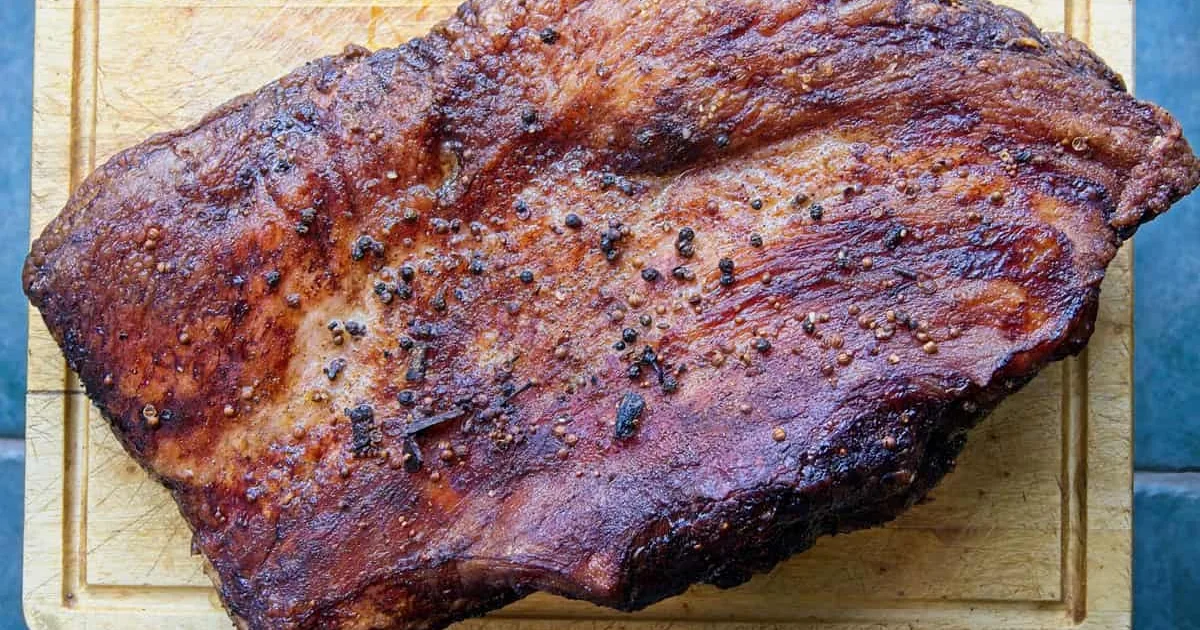
A brisket needs at least an hour of rest for quality, with two hours as a useful target. Plan optional extra buffer separately, then monitor any cooler or low-oven hold with a probe at or above 140°F.
What resting does
Slice a brisket straight off the smoker and much of its moisture ends up flooded across the cutting board instead of in each bite. Let it rest first and far more of that liquid stays in the meat. Resting also evens out the temperature between the hot surface and the center, and it gives residual heat time to keep softening the last of the connective tissue. The brisket is better an hour later than it was at the pull.
How long to rest
Treat one hour as the minimum rest for any brisket, and two hours as the target. Under an hour, the slices visibly bleed moisture and the flat eats drier than it should. Beyond two hours you are holding rather than resting, so keep the meat at or above 140°F.
If you have seen 135°F quoted instead, that is the FDA Food Code figure restaurants are inspected against, alongside equipment and monitoring rules a backyard cooler does not have. This guide uses 140°F as the home hot-holding floor, monitored in the meat.
The cooler hold, step by step
Pitmasters call it a faux cambro: an ordinary insulated cooler used to slow cooling while the rest of the meal catches up. It is insulation, not a heated cabinet, so the probe reading determines whether the hold remains safe.
- Leave the brisket wrapped in its butcher paper or foil, or wrap it fresh if it cooked naked. Add a layer of foil over paper if the paper is soaked through.
- Line an empty cooler with a dry towel, set the brisket in, and pack more towels around and over it. The towels fill the air space that would otherwise bleed heat.
- Close the lid and leave it shut. Every opening dumps heat. A probe wire run under the lid lets you watch the temperature without opening it.
- Hold until serving time, and slice straight from the hold. If the internal temperature approaches 140°F before you serve, move it to a monitored heated oven or serve it. A switched-off oven is insulation, not guaranteed hot holding.
Resting mistakes that undo the cook
- Slicing the whole brisket at once. Slice what the table will eat in the next few minutes. Exposed slice faces dry fast; the unsliced remainder keeps.
- Resting unwrapped on the counter. It cools through 140°F far sooner and the bark goes cold and hard. Wrapped in a cooler beats open air on every axis.
- A tight foil tent on a hot brisket straight off the pit. A very hot brisket can keep cooking in its own trapped heat. If it comes off well above target, vent the wrap for the first 15 to 20 minutes, then close it up for the hold.
- Skipping the rest because dinner is now. This is a planning failure, not a resting decision. Build the rest into the schedule from the start.
That last mistake is the one worth designing out. The brisket start time calculator includes the rest in its backward plan, the rest and hold calculator turns a brisket that finished early into a safe hold instead of a wasted window, and the timing guide covers the cook-length math it feeds on.
Common brisket resting questions
How long should a brisket rest?
At least 1 hour, and closer to 2 hours is better. Under an hour the slices lose noticeable moisture. Past two hours it becomes a hold, which is fine as long as the brisket stays above 140°F internal.
Can you rest a brisket too long?
Two things end a hold: the internal temperature dropping below 140°F, which is the food-safety line, or the bark softening past what you want. Wrapped in a dry cooler, several hours is routine, and the first hour or two improves the brisket. Past that you are preserving it, not improving it, so probe before you commit to a long hold.
Do you rest a brisket wrapped or unwrapped?
Wrapped. Keep it in its butcher paper or foil for the rest and any hold. If it comes off the smoker very hot, vent the wrap for the first 15 to 20 minutes so it does not keep cooking, then close it up.
Can I rest a brisket in the oven?
A heated oven can be a fallback when a cooler hold is running out of heat. Set it near 150 to 170°F and confirm with a probe: home ovens hold their lowest setting loosely, and one that drifts under 140°F is a slow cool-down rather than a hold, while one that runs hot keeps cooking the brisket. A switched-off oven only insulates and is not guaranteed safe holding.
Sources and safety guidance
Food-safety numbers on this page come from published guidance, not from Pitwright’s own testing. Barbecue targets, timings, and technique are craft, and are described as such in the text.
- Danger Zone (40°F to 140°F)USDA Food Safety and Inspection ServiceHot food held for later service stays at 140°F or above; food left between 40°F and 140°F is limited to 2 hours total, or 1 hour above 90°F ambient.
- FDA Food CodeU.S. Food and Drug AdministrationThe model code restaurants are inspected against, which is where the commercial 135°F hot-holding figure comes from. It is not the home-cooking guidance.
Related guides
Brisket Internal Temp: When Is Brisket Done?
Brisket is done around 203°F internal, but that number is only half the story. The target temp, why tenderness matters more, and the stall.
Read the guide ↗How Long to Smoke a Brisket: Per-Pound Times That Add Up
Plan about 75 minutes per pound at 225 to 250°F: a 12 lb packer runs about 15 hours. Per-pound times, why small flats break the rule, and when to start.
Read the guide ↗Butcher Paper vs Foil: Which Wrap Wins the Texas Crutch
Butcher paper breathes and protects bark; foil seals completely and cooks fastest. When to reach for each, and when to skip the wrap entirely.
Read the guide ↗