
TECHNIQUE · THE TEXAS CRUTCH
Butcher Paper vs Foil: Which Wrap Wins the Texas Crutch
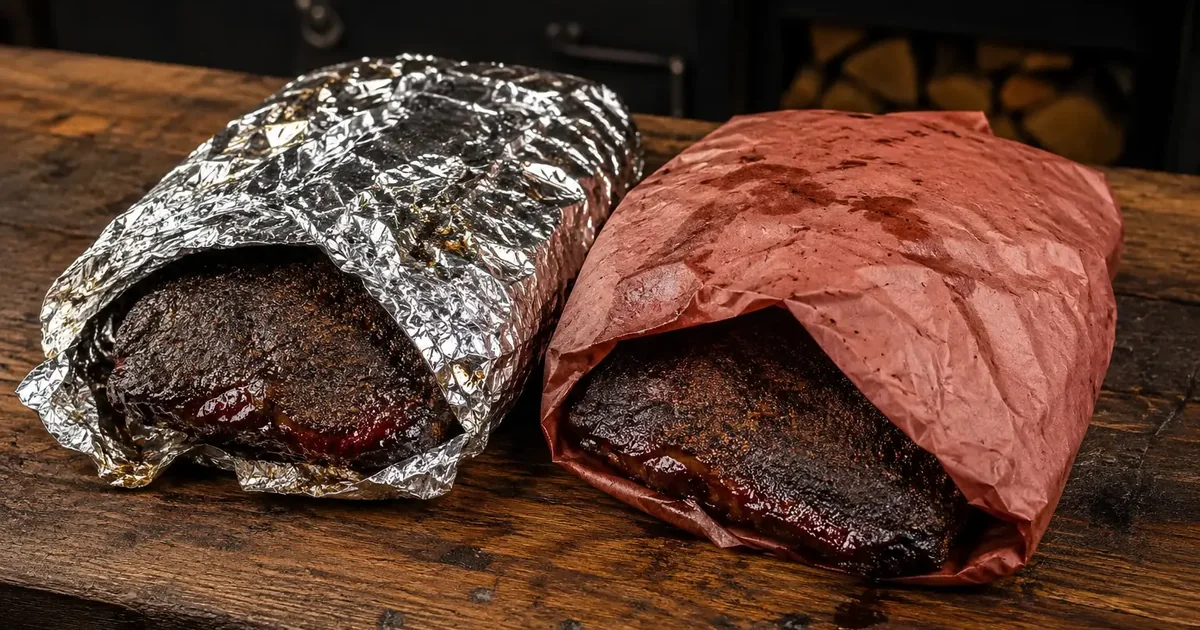
Wrapping mid-cook helps meat through the stall. Paper protects bark better, while foil moves the cook faster and holds more moisture. Choose the wrap based on which result matters for this cook.
The job a wrap does
Both wraps exist to fight the same thing: the stall, the hours-long plateau caused by evaporative cooling at the meat’s surface. Wrapping traps that moisture instead of letting it evaporate away, which lets the internal temperature start climbing again. Where paper and foil differ is how completely they seal, and that difference changes the bark, the speed, and the texture you end up with.
Side by side
| Butcher paper | Aluminum foil | |
|---|---|---|
| Seal | Breathes slightly, some moisture escapes | Fully sealed, no moisture escapes |
| Bark | Stays firm, close to unwrapped texture | Softens noticeably, can turn slightly mushy |
| Speed through the stall | Moderate | Fastest |
| Best for | Brisket, and anywhere bark matters | Ribs (3-2-1 method), speed, or extra-moist results |
Butcher paper: the standard brisket wrap
Unwaxed pink butcher paper is porous enough to let a little steam escape while still holding in enough moisture to break the stall. That balance is why it became the standard for brisket: it protects the bark you spent all those hours building without turning it soft and steamed the way a fully sealed wrap can. It is also more forgiving if you wrap slightly early, since it will not trap as much liquid as foil would.
Foil: fastest, and the classic for ribs
Aluminum foil seals completely, reducing evaporative cooling and trapping the most moisture. On large cuts such as brisket or pork butt, that helps the meat move through the stall faster. On ribs, the trapped moisture speeds tenderization during the wrapped middle phase of the 3-2-1 method. The trade-off is texture: a fully foiled wrap can leave the surface soft, sometimes described as "boiled" if it is left wrapped too long or with too much added liquid.
Foil is also the better call any time you are behind schedule and need to speed a cook along. See how long ribs take to smoke for the full 3-2-1 timing.
Or skip the wrap entirely
Cooking "naked," with no wrap at all, produces the thickest and darkest bark of the three options because the surface stays exposed to smoke and dry heat the whole cook. The cost is time: without a wrap the stall has to break on its own, which can add hours to an already long cook. This only makes sense when you have a wide time buffer and bark is the priority.
How to decide
- Cooking a brisket and bark matters? Butcher paper.
- Running the 3-2-1 method on ribs? Foil, for the middle wrapped phase.
- Behind schedule and need to catch up? Foil, on anything.
- Plenty of time and chasing maximum bark? No wrap.
- Not sure? Butcher paper is the safer middle ground for most cuts.
Whichever you choose, wrap around the same point: when the internal temperature parks in the stall, usually 160 to 170°F. For the full mechanics of why that plateau happens, see the meat stall explained. And if you want a stocked list of what to keep on hand for wrapping brisket specifically, the brisket tools guide covers it stage by stage.
Common wrapping questions
Is butcher paper or foil better for brisket?
Butcher paper is the standard for brisket because it holds in enough moisture to push through the stall while still letting the bark stay firm. Foil works too and is faster, but it softens the bark more.
Can I use regular foil instead of butcher paper?
Yes, foil pushes through the stall faster than paper. The trade-off is a softer, sometimes slightly steamed texture on the bark compared to paper.
What kind of butcher paper should I use for smoking?
Use unwaxed, food-grade pink butcher paper, sometimes called peach paper. Regular waxed paper is not rated for smoker temperatures.
Do I have to wrap my meat at all?
No. Cooking unwrapped ("naked") produces the thickest, darkest bark, but the cook takes longer and is less predictable because the stall has to break on its own.
When should I wrap during a smoke?
Most cooks wrap once the internal temperature plateaus in the stall, typically around 160 to 170°F, whether using butcher paper or foil.
Related guides
The Meat Stall Explained: Why Smoked Meat Stops Rising in Temperature
The stall is when a brisket or pork butt parks at the same temperature for hours. Why it happens, how long it lasts, and the three ways through it.
Read the guide ↗Brisket Internal Temp: When Is Brisket Done?
Brisket is done around 203°F internal, but that number is only half the story. The target temp, why tenderness matters more, and the stall.
Read the guide ↗The 3-2-1 Ribs Method: Timeline, Why It Works, When to Skip It
The 3-2-1 rib method: 3 hours of smoke, 2 wrapped, 1 to set the glaze at 225 to 250°F. Why it suits spare ribs, and why baby backs need 2-2-1 instead.
Read the guide ↗How Long to Smoke Ribs (Baby Back, St. Louis, and Spare)
Baby back ribs smoke in about 4 to 5 hours, spare or St. Louis in 6 to 7, at 225 to 250°F. The timing by cut, the 3-2-1 method, and how to test for done.
Read the guide ↗