
RIBS · BUYING COMPARISON
Baby Back vs Spare vs St. Louis Ribs: Which Rack to Buy
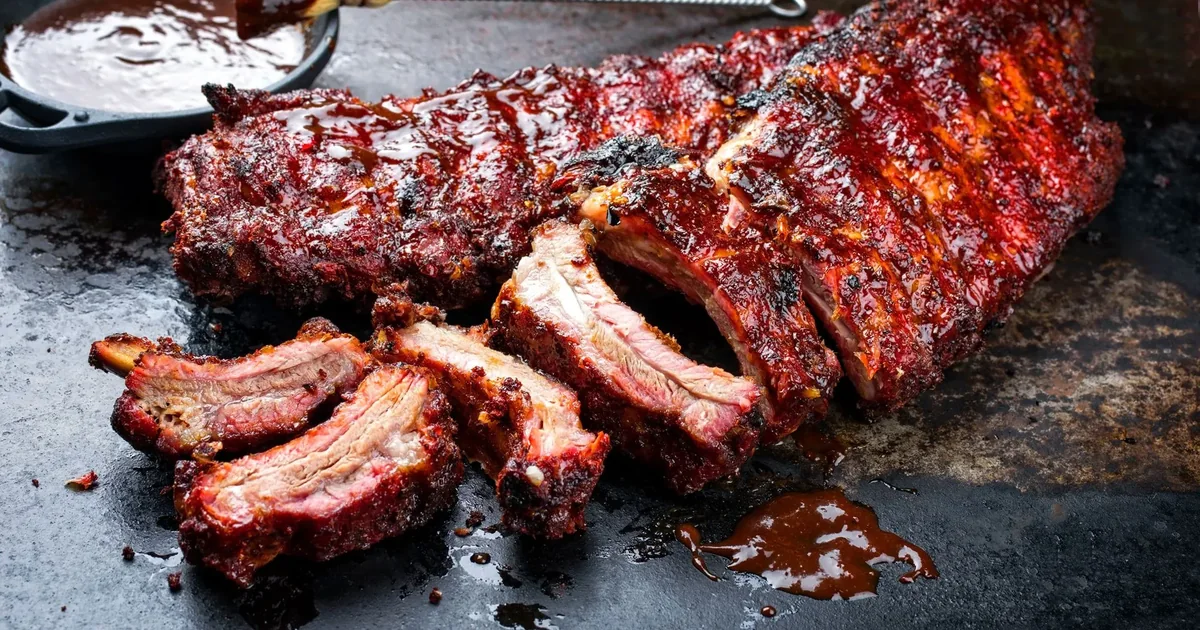
The rib case at the store sells three names cut from two places on the same animal, and the rack you pick decides your cook time, your doneness test, and how the finished rib eats. Compare each cut by origin, cook time, and how it eats from the smoker.
Two cuts, three names
Every pork rib comes off the same ribcage; the difference is height. Baby back ribs are cut from the top of the cage, up against the spine, where the loin muscle rides. That real estate makes them shorter, curved, and lean. Spare ribs are the lower, belly end of the same bones: longer, flatter, and marbled with the fat that neighborhood is known for.
St. Louis ribs are not a third cut at all, they are spare ribs squared up: the cartilage-heavy rib tips and the flap trimmed away, leaving a neat rectangular rack that lies flat and cooks evenly. Everything true of spares is true of St. Louis, minus the trimming work.
Side by side
| Baby back | Spare / St. Louis | |
|---|---|---|
| From | Top of the ribcage, at the loin | Lower ribcage, at the belly |
| Rack shape | Short, curved bones | Long, flatter bones; St. Louis is squared |
| Meat and fat | Leaner, loin-like meat on top of the bones | Fattier, meatier between the bones |
| Cook time at 225 to 250°F | About 4 to 5 hours | About 6 to 7 hours |
| Doneness feel | Bend test, toothpick-tender, around 198°F | Toothpick-tender, around 203°F |
| Forgiveness | Less: lean meat dries if overshot | More: fat buys margin for error |
How the difference plays out on the smoker
Both cuts run the same pit: 225 to 250°F at grate level, hickory, cherry, or apple in the fire. The fat is what separates the cooks. A spare rack’s marbling renders through the long middle of the cook and keeps basting the surface, which is why spares tolerate an extra half hour gracefully and baby backs punish it. That forgiveness is also why the classic 3-2-1 wrap schedule was built around spares, while baby backs want the shortened 2-2-1 version. Whichever rack you run, doneness is a feel call, not a clock: the bend and toothpick tests in the rib timing guide apply to both.
Which rack for which cook
- First rib cook, or a shorter afternoon: baby backs. The 4 to 5 hour window fits a same-day plan, and their leanness reads as familiar, almost chop-like pork.
- Deepest barbecue flavor for the money: spares or St. Louis. More fat, more connective tissue, more of what a smoker exists to transform, and usually a lower price per pound than baby backs.
- Neat presentation and even cooking: St. Louis. The squared rack lies flat, fits the grate, and slices into uniform ribs.
- Feeding a crowd: spares. The biggest racks and the most meat between the bones. Untrimmed spares also bring the rib tips along, a cook’s snack hiding in the trim.
Whichever rack comes home, pull the papery membrane off the bone side before seasoning so smoke and rub reach the meat, and scale the rub to the rack’s actual weight with the rub calculator. Pit and pull numbers for every cut live on the smoker temperature chart.
Common questions about rib cuts
What is the difference between baby back and spare ribs?
Position on the ribcage. Baby backs come from the top near the spine and are shorter, curved, and lean. Spares come from the lower, belly end and are longer, flatter, fattier, and meatier between the bones. Spares take roughly two hours longer to smoke.
What are St. Louis style ribs?
Spare ribs trimmed into a neat rectangle: the cartilage-heavy rib tips and flap are removed so the rack lies flat and cooks evenly. They are the same meat as spares and cook on the same 6 to 7 hour schedule.
Are baby back ribs or spare ribs better for smoking?
Spares and St. Louis racks have more fat and connective tissue, which is what long smoking transforms best, and they are more forgiving of an overshoot. Baby backs are leaner, quicker, and suit a shorter cook. Neither is wrong; they reward different days.
Do baby backs and spares cook at the same temperature?
Yes, both run at 225 to 250°F at grate level. The difference is duration: about 4 to 5 hours for baby backs and 6 to 7 for spare or St. Louis racks, with doneness confirmed by feel rather than the clock.
Related guides
How Long to Smoke Ribs (Baby Back, St. Louis, and Spare)
Baby back ribs smoke in about 4 to 5 hours, spare or St. Louis in 6 to 7, at 225 to 250°F. The timing by cut, the 3-2-1 method, and how to test for done.
Read the guide ↗The 3-2-1 Ribs Method: Timeline, Why It Works, When to Skip It
The 3-2-1 rib method: 3 hours of smoke, 2 wrapped, 1 to set the glaze at 225 to 250°F. Why it suits spare ribs, and why baby backs need 2-2-1 instead.
Read the guide ↗Pork Butt Finish Temp: When Is Pulled Pork Done?
The pork butt finish temp for pulled pork is about 205°F. Learn the pit temperature, probe and bone tests, stall, timing, and rest.
Read the guide ↗