
TECHNIQUE · WRAPPING TIMING
When to Wrap Brisket, Ribs, and Pork Butt
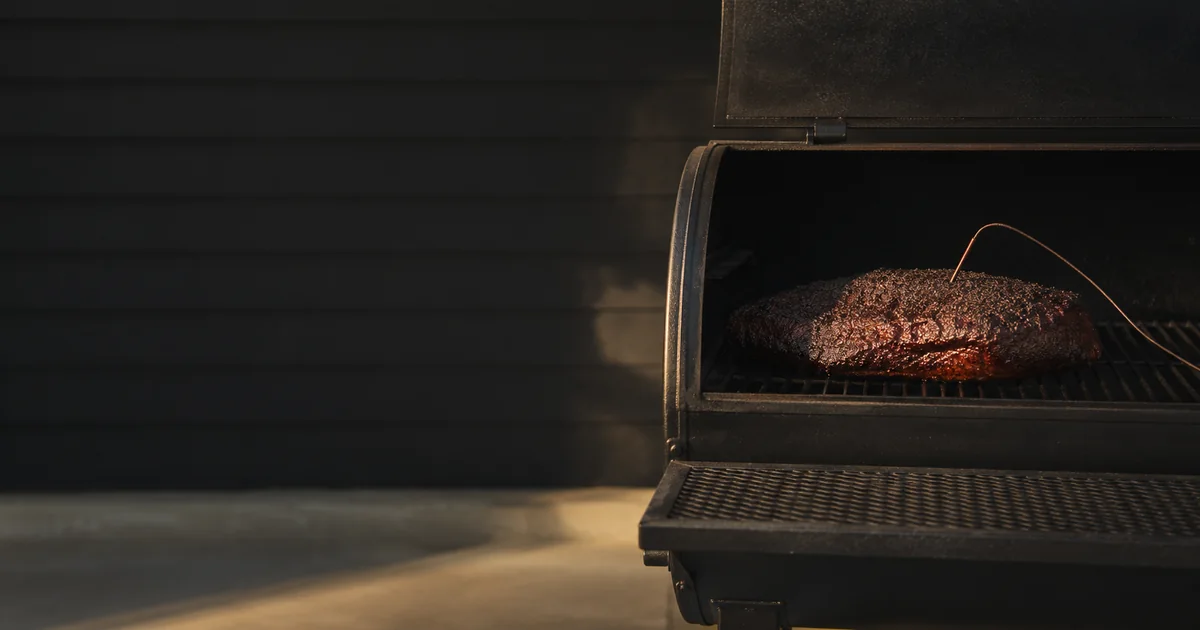
Photo by austinboardman (CC BY 2.0), cropped.
Wrapping can help a slow cook along, but wait until the bark is set if the schedule allows. Wrap too early and steam softens the surface you worked to build. Wait longer and the bark stays firmer.
The short answer: wrap when the bark is ready
A thermometer can tell you when to start looking, but it cannot tell you whether the outside is ready to wrap. On brisket and pork butt, the bark often sets somewhere around 160 to 175°F, close to the stall. That range is a checkpoint, not a command. Look for a dark, dry surface that stays put instead of smearing or pulling loose under a light touch with tongs or a gloved finger.
What is happening under that surface has its own guide in the bark science page.
What wrapping changes
Wrapping slows evaporation from the meat’s surface. That helps the internal temperature climb through the stall, but it also changes the outside of the meat. Paper breathes enough to protect a firm bark. Foil seals tight and moves the cook fastest, but it can soften the surface. The full tradeoff is in the butcher paper versus foil guide.
| Cut | Usual window to check | Wrap cue | Skip the wrap when |
|---|---|---|---|
| Brisket | Often 160 to 175°F | The bark is dark, dry, and stays attached | You have a generous time buffer and want the firmest bark |
| Pork butt | Often 160 to 175°F | The outside is mahogany-colored and no longer rubs off easily | You want a heavier bark and the cook is not behind |
| St. Louis ribs | After the color sets | The rack has good color and the rub has set | You prefer a firmer bite or are not using 3-2-1 |
| Baby back ribs | After the surface sets | The rack has color, some bone pull-back, and does not look wet | The ribs are moving quickly and the bark needs time |
| Beef plate ribs | Often near the stall | The bark is dark and stable across the rack | The cook has time and the surface is still developing |
| Chicken | Usually no wrapping window | None in normal smoking | Almost always, because a wrap softens the skin |
How to tell the bark is ready
- It looks dry, not wet. The rub has darkened and no longer shines with fresh surface moisture.
- It stays in place. Touch a small edge lightly with clean tongs or a gloved finger. A ready bark does not smear, lift, or leave a paste behind.
- It has the color you want. Brisket and beef ribs should look deep brown to near-black. Pork can run red-brown or mahogany. That color is a clue, but the dry, set surface makes the call.
Do not rush this stage because the internal temperature hit a familiar number. A premature wrap traps steam against a weak exterior, which is how a promising bark turns soft and muddy.
Wrap sooner when the schedule needs help
A wrap is useful when the cook is running behind, weather slowed the pit, or dinner has a fixed serving time. Foil gives the largest speed boost. Butcher paper is the middle path when you want to shorten the stall without giving the bark a full steam bath. If the cook is already on the pit and you need to know where you stand, Cook Rescue turns your current temperature and serving time into an ahead, on-track, or running-late call. If you are still planning, build the hold into the day before you light the fire with the brisket start-time calculator.
Cut-specific calls at the pit
Brisket and pork butt
These long cooks give you the most flexibility. Start checking the bark near the stall, then choose paper for a firmer exterior, foil when time matters, or no wrap when the schedule has room. Use the brisket timing guide and the pork butt temperature guide for the larger cook plan around that decision.
Ribs
Ribs do not need to wait for a stall in the same way as a brisket. Their wrap timing depends more on color, bark, and the texture you want. Foil remains the usual middle phase in the 3-2-1 rib method, but that method is a template, not a law. A rack with pale, soft bark needs more unwrapped time.
Beef plate ribs and chicken
Beef plate ribs follow the brisket rule: wait for the bark to set, then wrap only if time or surface protection calls for it. The beef plate ribs guide covers the full cook. Chicken is different. Wrapping holds moisture against the skin and makes it harder to finish crisp, so it is rarely the right move for a smoked bird.
The five-question wrap check
- Has the bark set, or does it still smear under a light check?
- Is the cut entering a stall or taking longer than the serving plan allows?
- Do you want the firmer bark from paper or the faster cook from foil?
- Do you have enough time to leave it unwrapped?
- Is this chicken, where wrapping usually works against the skin?
Answer those five questions and the decision is usually clear. For a rib-specific schedule, see how long to smoke ribs.
Common wrapping timing questions
What temperature should I wrap brisket?
Start checking near 160 to 175°F, often around the stall, but wrap when the bark is dark, dry, and firmly attached. A temperature reading is a checkpoint, not a mandatory trigger.
Do I have to wrap pork butt?
No. Wrapping pork butt speeds the cook and protects moisture, but leaving it unwrapped builds a firmer bark. Wrap when the bark has set and the schedule benefits from it.
Should I wrap ribs in foil or butcher paper?
Foil is the usual choice when you want tender ribs on a 3-2-1-style schedule because it seals tightly and speeds the cook. Butcher paper keeps the surface firmer but does less to push the ribs along.
Can I wrap too early?
Yes. Wrapping before the bark sets traps steam against a soft exterior and can leave the surface mushy. Wait until the rub no longer smears or pulls loose under a light check.
Should I wrap chicken when smoking it?
Usually no. A wrap traps moisture against the skin and makes it harder to finish crisp. Keep chicken unwrapped, then use a hotter finish if the skin needs help.
Related guides
Butcher Paper vs Foil: Which Wrap Wins the Texas Crutch
Butcher paper breathes and protects bark; foil seals completely and cooks fastest. When to reach for each, and when to skip the wrap entirely.
Read the guide ↗The Meat Stall Explained: Why Smoked Meat Stops Rising in Temperature
The stall is when a brisket or pork butt parks at the same temperature for hours. Why it happens, how long it lasts, and the three ways through it.
Read the guide ↗The 3-2-1 Ribs Method: Timeline, Why It Works, When to Skip It
The 3-2-1 rib method: 3 hours of smoke, 2 wrapped, 1 to set the glaze at 225 to 250°F. Why it suits spare ribs, and why baby backs need 2-2-1 instead.
Read the guide ↗How Long to Smoke a Brisket: Per-Pound Times That Add Up
Plan about 75 minutes per pound at 225 to 250°F: a 12 lb packer runs about 15 hours. Per-pound times, why small flats break the rule, and when to start.
Read the guide ↗How Long to Smoke Ribs (Baby Back, St. Louis, and Spare)
Baby back ribs smoke in about 4 to 5 hours, spare or St. Louis in 6 to 7, at 225 to 250°F. The timing by cut, the 3-2-1 method, and how to test for done.
Read the guide ↗