
SCIENCE · BARK FORMATION
How Bark Forms on Smoked Meat
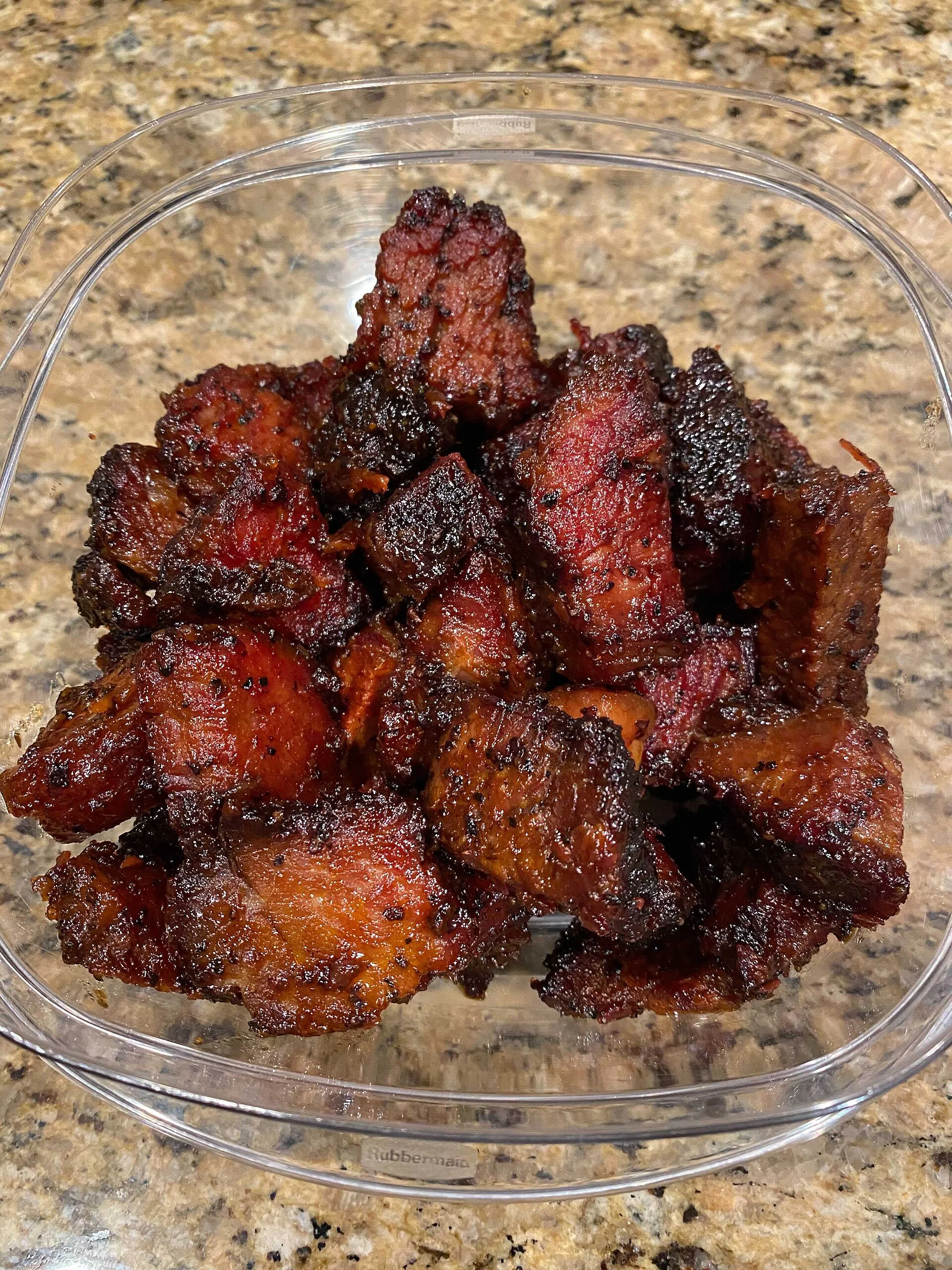
Photo by Wesley Fryer (CC BY 2.0), cropped and resized.
Bark is the dark crust built as the meat’s surface dries, catches smoke, browns, and binds with the rub. A pale or soft crust usually points to a problem in one of those steps.
Four processes build the crust
Bark is not seasoning sitting on top of the meat. By the end of a long cook it is a fused layer, part meat surface and part rub, and four processes build it together:
That contest helped turn barbecue into a sport, covered in the history of barbecue competitions.
Two threads run alongside this history: the equipment lineage from earthen pit to pellet grill, and how brisket became the Texas standard.
- Dehydration. The surface has to dry before anything good can happen to it. A wet surface steams; a dry surface browns.
- Smoke deposition. Tiny particles and sticky gases in the smoke settle onto that drying surface and stay there.
- Maillard browning. Proteins and sugars on the surface react slowly at barbecue temperatures, building hundreds of brown, savory flavor compounds.
- A fused spice crust. Salt pulls moisture out of the meat, dissolves, and sinks back in; the spices left behind hydrate, bake on, and become the outer shell.
Dehydration comes first
Bark starts as the surface dries. The meat goes on damp with the rub stuck to it, and over the first hours at a 225 to 250°F pit the exterior passes through stages: wet, tacky, matte, then dry and rough. Patting the surface dry before applying rub helps that process, while a thin slather of mustard or hot sauce acts mainly as glue.
That same evaporation is what causes the stall, so bark and the stall arrive together: the surface cannot brown well while it is still shedding moisture, and the interior cannot climb while that moisture is evaporating. Spritzing is fine in moderation, but every heavy spray resets the drying clock. Misting every thirty minutes can keep the surface too wet to brown for much of the cook.
For a brisket on the pit now, the spritz decision guide covers when a light mist can help a dry edge, when to leave a wet surface alone, and when to stop spraying.
Smoke deposits on a drying surface
Smoke carries tiny particles and tar-like gases that settle onto whatever they touch, and they cling best to a surface that is slightly tacky: dry enough to hold them, moist enough for the sticky condensates to grab. That window sits in the early and middle hours of the cook, so most smoke character builds early and the last hours contribute more color than new smoke flavor. It is a different mechanism from the pink smoke ring, which is a gas reaction with the meat itself; deposition is about what lands and stays on the surface.
This is also where the fire matters. Real wood and charcoal combustion produces a dense load of those particles and gases. Cookers that heat without burning fuel in the same chamber, like electric or gas smokers with a chip tray, deliver a much lighter dose, and their bark tends to come out thinner and paler no matter how long the cook runs.
Maillard reactions do the browning
Browning is the Maillard reaction: proteins and reducing sugars on the surface reacting into brown pigments and a long list of savory, roasted, nutty aroma compounds. It is not caramelization, which involves sugar alone; the Maillard reaction needs the amino acids in meat protein, so meat browns differently from onions in a pan.
At backyard barbecue temperatures the surface browns slowly. While the exterior is still carrying moisture, evaporation pins it near the boiling point of water, and browning crawls. Once the surface dries out, its temperature can climb toward pit temperature, the reactions speed up, and color arrives fast. A brisket can look tan at hour six and deeply mahogany by hour ten: the final third of the cook does most of the browning, on a surface that spent the first two-thirds drying out.
The rub becomes the outer shell
Moisture from the meat dissolves the salt into a concentrated surface brine, which then diffuses inward and seasons beyond the crust. Coarse salt and cracked pepper became the Texas standard partly because both survive a dozen hours of heat without scorching, and the pepper toasts into something round and nutty instead of bitter.
Sugar browns quickly and can burn at a hot-running pit or during a long unwrapped cook. The sweeter the rub, the more closely you need to watch the pit temperature and total unwrapped time.
What wrapping does to bark
Wrapping trades bark for speed and moisture, and it helps to know exactly what the trade buys. A sealed wrap traps the water vapor still leaving the meat, and that trapped vapor presses back into the crust, rehydrating it. The bark stops building the moment it is wrapped and starts softening.
| Wrap | Vapor handling | Effect on bark |
|---|---|---|
| Aluminum foil | Seals completely | Softens the most; bark steams loose |
| Butcher paper | Breathes slightly | Softens some; crust stays intact, just tenderer |
| No wrap | Surface keeps drying | Thickest, hardest, darkest bark; longest cook |
Wrapping can still be useful when speed or moisture matters more than the firmest bark. Wait until the crust is set, dark, dry, and firmly attached before paper or foil goes on; the wrap-timing guide covers that call cut by cut, and the butcher paper versus foil comparison covers the material choice. If a brisket crust has already softened, the soft-bark rescue guide explains when a short dry finish can help.
When a bark fails, one of these is why
- The pit ran cool. A surface parked at 200°F dries eventually but barely browns. Hold 225 to 250°F at the grate and the color comes.
- It was spritzed too often. Constant misting keeps resetting the drying stage the browning depends on.
- It was wrapped before the crust set. Steam softened a crust that had not finished building.
- The rub was heavy on sugar and the pit ran hot. Fast browning overshot into burnt.
- The cooker barely combusts. Electric and chip-tray smokers deposit little, so the crust lacks the smoke-derived layer entirely.
Hold a steady fire and give the surface time to dry, brown, and set. The smoker temperature control guide breaks it down by cooker type. And if this is all heading toward your first packer, the Beef Brisket Command Pack puts the whole cook, bark included, on one printable page.
Common questions about bark
What is bark on smoked meat made of?
A fused layer of dehydrated meat surface, deposited smoke particles and gases, Maillard browning products, and the baked-on rub. Salt and pepper dominate classic bark because both stand up to long heat without scorching.
Does wrapping ruin bark?
It softens it. Foil traps the most steam and softens bark the most; butcher paper breathes a little and preserves more of the crust. Wrapping after the bark has set limits the softening, so timing the wrap matters.
Why is my bark pale or soft?
Usually one of five reasons: the pit ran cool, the surface was spritzed too often, the meat was wrapped before the crust set, the rub was sugary and scorched, or the cooker produces little real combustion, like electric or chip-tray smokers.
Does sugar in a rub help bark?
It browns quickly and adds color, but it burns easily, so sweet rubs need steadier, cooler pits and shorter unwrapped times. Classic salt-and-pepper bark relies on protein browning instead of sugar.
Is dark bark burnt?
No. Deep brown to near-black bark on beef is normal after a long cook and tastes rich, not burnt. Burnt shows up as an acrid smell and a bitter, ashy taste. If the crust tastes good, it is not burnt, however black it looks.
Related guides
The Meat Stall Explained: Why Smoked Meat Stops Rising in Temperature
The stall is when a brisket or pork butt parks at the same temperature for hours. Why it happens, how long it lasts, and the three ways through it.
Read the guideWhen to Wrap Brisket, Ribs, and Pork Butt
Wrap after the bark sets, when the surface is ready. Timing guidance for brisket, ribs, pork butt, and beef ribs.
Read the guideButcher Paper vs Foil: Which Wrap Wins the Texas Crutch
Butcher paper breathes and protects bark; foil seals completely and cooks fastest. When to reach for each, and when to skip the wrap entirely.
Read the guideThe Smoke Ring: What It Is and How to Get One
The smoke ring forms when combustion gases react with the meat. It is cosmetic and does not change the flavor.
Read the guideBest Brisket Rub Recipes: 3 to Try
Three brisket rub recipes: a classic Texas salt-and-pepper, a competition SPG blend, and a coffee bark version. Exact ratios, scaled for a 12 lb brisket.
Read the guide