
HISTORY · COMPETITION
How Barbecue Became a Competition Sport
Organized barbecue contests with standard rules, judges, and trophies are less than fifty years old. The circuit that began in Memphis and Kansas City now influences how many backyard cooks trim, time, and present barbecue.
Before trophies: the fairground and the picnic
The pre-history of competition barbecue is communal cooking itself. The regional traditions that formed in the 1800s were built around public events: county fairs hiring a named pitmaster to cook a thousand pounds of mutton, parishes competing to hire the most popular cook for their picnics, political barbecues where the quality of the pit work was public knowledge. Harry Green in Owensboro cooked the Daviess County Fair for over thirty years because his mutton kept winning the crowd. That is competition without a scorecard.
Memphis in May, 1978
The Memphis in May festival first held its barbecue contest in 1978, during the festival's second year. A small group of friends cooked whole hogs on the riverbank and gave out prizes. The contest grew into the World Championship Barbecue Cooking Contest, now billed as the largest pork barbecue cooking contest in the world and known for elaborate team booths and a three-day party atmosphere.
Kansas City, 1985: the society that wrote the rules
The Kansas City Barbeque Society formed in 1985, founded by Carolyn Wells along with her husband Gary Wells and friend Rick Welch. It created a standard rulebook, trained and certified judges, defined four categories (chicken, pork ribs, pork, and brisket), and put blind judging on a uniform scorecard.
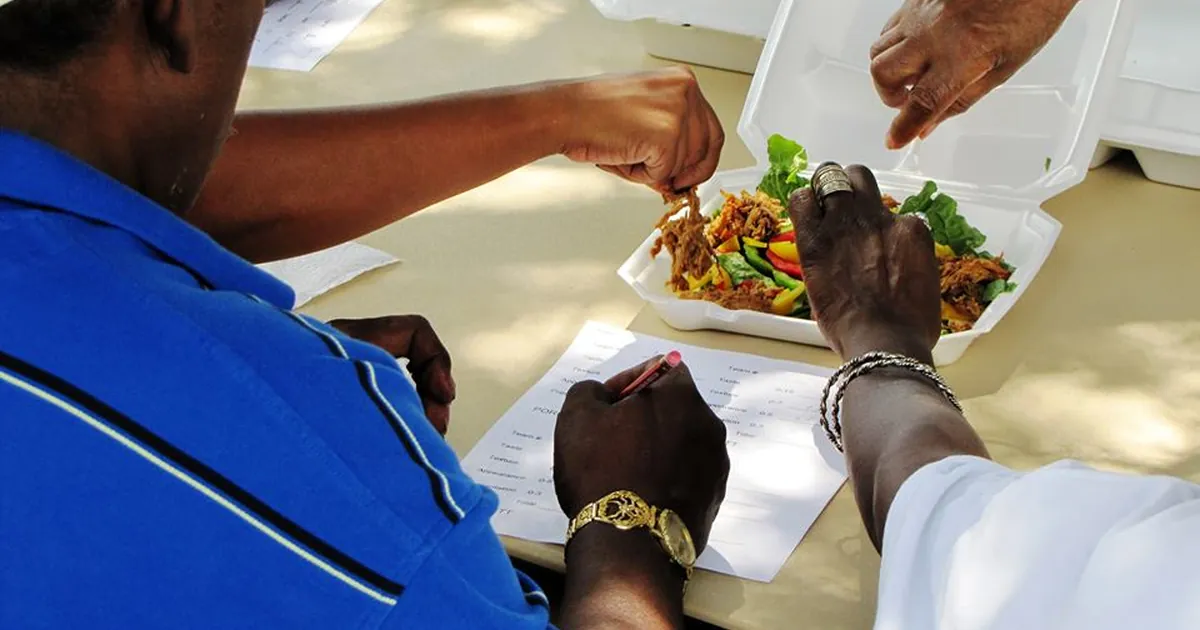
Blind judging separates the food from a team’s booth and showmanship. Entries are sampled anonymously and scored on appearance, taste, and texture. KCBS grew into the world's largest barbecue organization, sanctioning hundreds of contests a year, and its scorecard became the de facto standard copied by other sanctioning bodies.
What competition changed about everyday barbecue
| Competition innovation | How it leaked into backyards |
|---|---|
| Standardized four-meat format | The default mental model of a full cook: chicken, ribs, pulled pork, brisket |
| Blind judging on taste, texture, appearance | Home cooks plating deliberately instead of saucing everything at once |
| Precise turn-in windows | Planning cooks backward from a serving time, the way this site's calculators do |
| Resting and holding routines | Resting meat wrapped in coolers instead of slicing straight off the pit |
| Trim discipline | Uniform, squared-off brisket trim before the cook ever starts |
Some people inside the tradition criticize all this: competition barbecue rewards bite-sized pieces judged in seconds, which favors sugar-heavy glazes and perfectly uniform slices over a chopped whole hog. Whole-hog cookers have had to fight for their own categories within systems built around the four individual meats. The sport and the older tradition overlap but are not the same thing.
Television and the boom
Television brought competition barbecue to a wider audience in the 2000s by following the circuit and introducing viewers to its teams. The coverage also concentrated attention on a narrow slice of cooks. The Black pitmasters article covers parts of the tradition that this competition-focused view often missed.
Reading a contest today
- Find the sanctioning body on the poster, then check its rules, categories, and judging standard before you walk in.
- Watch the turn-ins if spectators can; the deadline shows how tightly teams manage the cook.
- Talk to teams during times when the event allows visitors, without interrupting their turn-in work.
- At home, practice one category at a time before trying to reproduce a full four-meat schedule.
Where this history comes from
Common questions about barbecue competition history
When was the first barbecue competition?
The modern era starts with the Memphis in May festival's World Championship Barbecue Cooking Contest, first held in 1978. Community barbecues with contest elements, like county fairs hiring a named pitmaster, go back to the 1800s, but organized contests with rules and judges are a product of the late 20th century.
What is the Kansas City Barbeque Society?
KCBS formed in 1985, founded by Carolyn Wells with Gary Wells and Rick Welch. It wrote the standard rulebook, certifies judges, defines the four categories of chicken, ribs, pork, and brisket, and standardized blind judging. It grew into the world's largest barbecue organization, sanctioning hundreds of contests a year.
What is blind judging in barbecue contests?
Judges sample entries anonymously and score each one on appearance, taste, and texture without seeing the team or its setup. Judges score only the food in the blind-judged meat categories, so booth presentation and showmanship carry no weight there, and most sanctioning bodies now copy the KCBS scorecard.
Do barbecue competitions cook whole hog?
Some do, but the big sanctioning bodies center four individual meats: chicken, pork ribs, pork shoulder, and brisket. Whole-hog cooks have had to win dedicated categories within systems built around those four, which remains an active tension between the sport and the older tradition.
Related guides
Why Barbecue Is Different in Every Region
Carolina whole hog, Memphis ribs, Kansas City everything, Texas brisket. Each regional style is a record of who settled there and what meat cost.
Read the guideBrisket Internal Temp: When Is Brisket Done?
Brisket is done around 203°F internal in the flat, when a probe slides in like butter. Point vs flat temps, the 160°F stall, wrapping, and a 225 to 250°F pit.
Read the guideHow Long to Smoke Ribs (Baby Back, St. Louis, and Spare)
Baby back ribs smoke in about 4 to 5 hours, spare or St. Louis in 6 to 7, at 225 to 250°F. The timing by cut, the 3-2-1 method, and how to test for done.
Read the guidePork Butt Finish Temp: When Is Pulled Pork Done?
The pork butt finish temp for pulled pork is about 205°F. Learn the pit temperature, probe and bone tests, stall, timing, and rest.
Read the guide