
HISTORY · REGIONAL STYLES
Why Barbecue Is Different in Every Region
Every American barbecue region grew around its local economy: which animals were cheap, which immigrants ran the butcher shops, and who was allowed to own a restaurant. Those differences shaped the meat, sauce, and cooking style in each place.
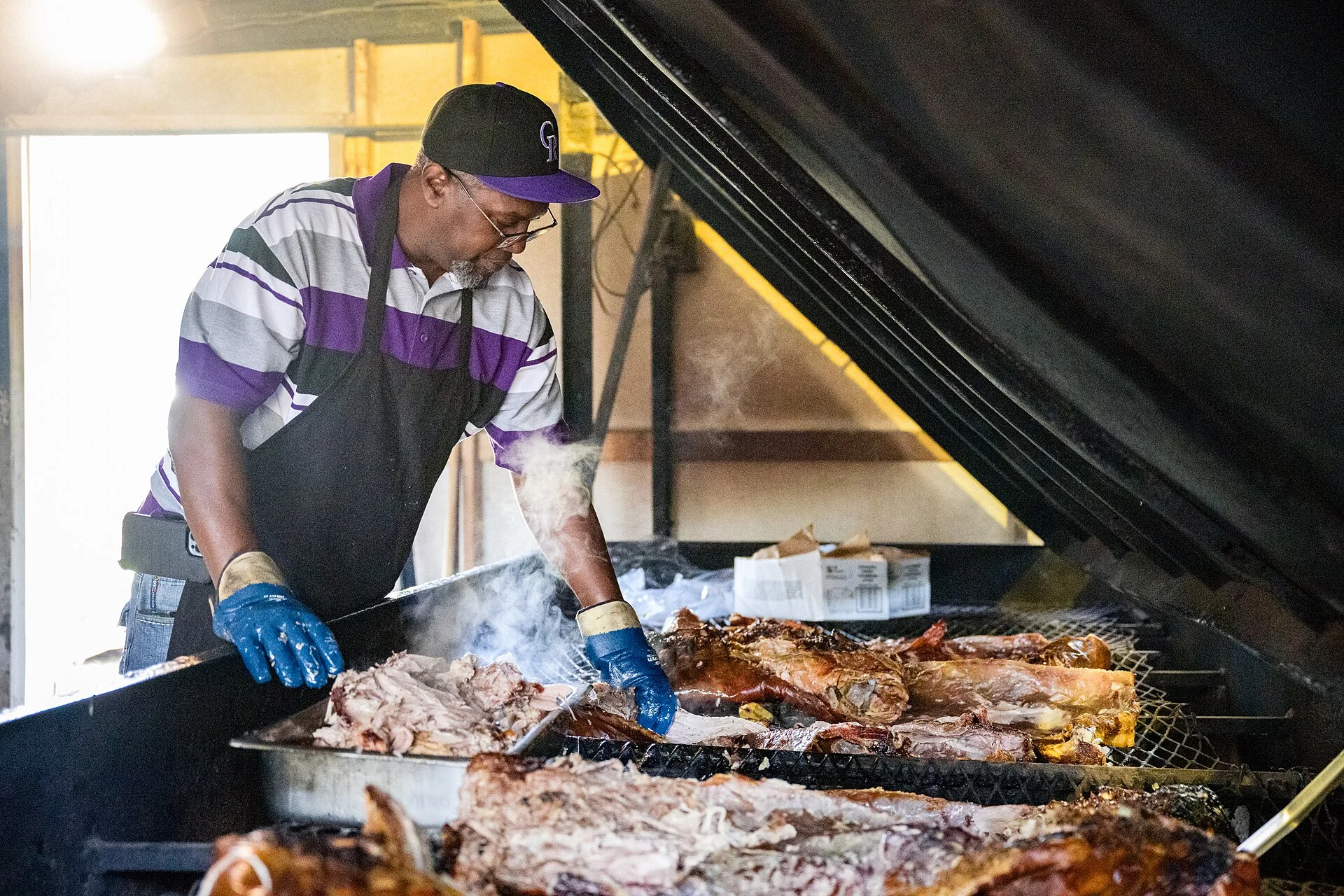
Photo by City of Greenville, North Carolina (public domain)
How the regions diverged
Every regional style descends from the same colonial practice: whole animals cooked slowly over coals in a pit, mopped with something sharp. As the history of barbecue shows, that method spread across the South before the United States existed. What changed afterward was local. Each region kept the fire and adjusted the animal, the sauce, and the business model around it.
The Carolinas: pork country, split by sauce
The sauce differences have their own history, from thin vinegar bastes to table dips and bottled tomato sauces. The history of barbecue sauce follows those regional branches and separates documented recipes from disputed origin stories.
Pigs came with the first Spanish expeditions in the 1500s and thrived in the Southeast, where cattle did less well. By 1728 the Virginia surveyor William Byrd could write of the Carolina border country that raising hogs was the only business there, managed with little trouble and providing the diet locals were most fond of. Pork was the cheapest meat in the colonial Southeast, so pork became barbecue.
Eastern North Carolina kept the original form most faithfully: a whole hog roasted over coals, basted with nothing but cider vinegar, red pepper, and salt, then chopped and dressed with more of the same. That thin pepper vinegar is the oldest sauce family in America, centuries old by most accounts.
Head west into the Piedmont around Lexington and the style shifts: pork shoulders instead of whole hogs, and a vinegar dip with a little tomato in it. Food historian John Shelton Reed traces that Lexington style to pop-up barbecue stands around the courthouse square in the World War I era, run largely by cooks of German descent. His line about it: where you find Piedmont-style barbecue is basically where you find Lutherans.
South Carolina adds the fourth sauce family. Starting in the 1730s, the colony actively recruited German families and even paid their passage, and their descendants left a yellow-gold mark on the state: a mustard-based sauce found almost nowhere else in the world. South Carolina is the only state where all four sauce traditions, vinegar-pepper, mustard, light tomato, and heavy tomato, live side by side.
Memphis: ribs stop being scrap
Memphis sits on the Mississippi with pigs everywhere, but its signature move came late. In 1948 Charlie Vergos opened a snack joint in a downtown basement, selling ham sandwiches and beer, and turned an old elevator shaft into a smoker for flavor. At the time, ribs were looked at as scrap meat, a backyard staple rather than a restaurant dish. Vergos seasoned racks with a rub based on his Greek father's chili spices, grilled them close to the fire, and helped turn dry-rubbed ribs into a cuisine.
Memphis also gave competition barbecue its biggest stage. The Memphis in May festival added its barbecue cooking contest in 1978, and it grew into an event that bills itself as the largest pork barbecue cooking contest on earth.
Kansas City: smoke everything
Kansas City barbecue grew with the city’s stockyards. Henry Perry arrived from Memphis in 1907, set up a stand in the Garment District, and later moved to the 18th and Vine neighborhood, slow-cooking over hickory and oak with the meat juices dripping onto the coals. He smoked possum, hog, raccoon, and mutton, using the range of meat available in a stockyard town.
Perry called himself the Barbecue King in newspaper ads, and the cooks who passed through his pits went on to open Arthur Bryant's and Gates, the restaurants that still define the city. The full story is in the history of Black pitmasters.
Kansas City also perfected the thriftiest delicacy in barbecue: burnt ends, the seasoned point-end pieces of the brisket that pit crews used to eat themselves before anyone thought to sell them. Bottling and shipping helped spread Kansas City's thick, sweet, molasses-heavy sauce beyond the region.
Texas: butcher shops and brisket
Texas barbecue is usually told as four streams merging: European meat-market smokehouse practice, Southern and Black pit cooking, Mexican barbacoa, and ranch cooking. In Central Texas, German and Czech immigrants opened butcher shops in the mid-to-late 1800s, and their habit of smoking unsold meat before it spoiled became the menu. Workers, barred from many restaurants in the early 1900s, bought that smoked meat by the pound, ate it standing up off the butcher paper, and called it barbecue.
Brisket was a cheap, plentiful cut that smokehouses needed to move before Monday. A long cook over indirect heat made it tender, and the cut butchers once sold cheaply now anchors menus across the country. If you are cooking one yourself, start with the brisket internal temp guide, and if you are choosing equipment, see offset vs pellet for brisket.
Other regional styles
| Place | Signature | How it happened |
|---|---|---|
| Alabama (Decatur) | Chicken under mayonnaise-white sauce | Bob Gibson, a railroad worker, started smoking chickens on weekends in the mid-1920s; the mayo-vinegar sauce kept them moist |
| Kentucky (Owensboro) | Mutton, not pork or beef | Large public barbecues were common by the 1820s with mutton the meat of choice; Harry Green turned it into a business in the late 1880s |
| California (Santa Maria Valley) | Beef over red oak, with pinquitos beans | Mid-1800s ranch feasts for vaqueros; local butchers refined the cuts, and tri-tip joined the menu in the 1950s |
These smaller traditions show how one cooking method changed with local meat, fuel, and taste. Each place developed its own definition of barbecue.
The pattern underneath all of it
- Cheap local protein sets the meat: hogs in the colonial Southeast, beef where the stockyards and butcher shops were, mutton where sheep farming made it abundant.
- Immigrant trade skills set the technique: German and Czech butchers in Central Texas and the Piedmont, Greek seasonings in Memphis.
- Excluded cooks built the deepest traditions and often the first businesses, from Harry Green in Owensboro to Henry Perry in Kansas City.
- Older sauce traditions rely on thin vinegar mops, while newer, urban, shipping-friendly styles bottle something thicker and sweeter.
Regional definitions of barbecue reflect the meat, fuel, migration, and restaurant history of each place. No one region supplies the only valid definition.
Where this history comes from
- NCpedia (state encyclopedia of North Carolina): barbecue
- South Carolina Barbeque Association: BBQ history
- WFDD: what is the history of Lexington barbecue?
- The Rendezvous: history
- Memphis in May: history
- Texas Historical Commission: bringing Texas barbecue history to the table
- Authentic Texas: the history of Texas barbecue, brisket and smoke
- Encyclopedia of Alabama: Big Bob Gibson Bar-B-Q
- Los Angeles Times: tri-tip and the history of Santa Maria barbecue
Common questions about regional barbecue styles
What are the main regional barbecue styles in the US?
The commonly recognized ones are Eastern and Piedmont North Carolina, South Carolina with its four sauce families including mustard, Memphis ribs, Kansas City's smoke-everything approach, and Central Texas brisket. Smaller but distinct traditions include Alabama white-sauce chicken, Kentucky mutton around Owensboro, and Santa Maria Valley beef over red oak.
Why is Texas barbecue beef while Carolina barbecue is pork?
Local economics. Hogs were the cheapest meat in the colonial Southeast, so pork became the tradition there. German and Czech butcher shops in Central Texas worked cattle, and their smoked leftovers became the menu. Each region built its style on whatever protein was abundant and inexpensive.
Where did mustard-based barbecue sauce come from?
South Carolina's German settlers. Starting in the 1730s the colony recruited German families and paid some of their passage, and their descendants' mustard sauce is still concentrated where those families settled. It is found almost nowhere else in the world.
Which regional style is oldest?
Eastern North Carolina whole hog with vinegar-pepper sauce is the closest to the original colonial method: a whole animal over coals mopped with nothing but vinegar, red pepper, and salt. The thin pepper vinegar is considered America's oldest barbecue sauce family.
Related guides
A Short History of Barbecue: From Barbacoa to the Pit
Barbecue comes from barabicu, a Taíno word in print by 1526. How it moved north to the pits of the colonial Southeast, and what historians still debate.
Read the guideThe Black Pitmasters Who Built American Barbecue
From enslaved pit cooks to Henry Perry in Kansas City: the Black cooks who created, carried, and commercialized American barbecue, and why their names faded.
Read the guideBrisket Internal Temp: When Is Brisket Done?
Brisket is done around 203°F internal in the flat, when a probe slides in like butter. Point vs flat temps, the 160°F stall, wrapping, and a 225 to 250°F pit.
Read the guideOffset Smoker vs Pellet Grill: Which Is Better for Brisket?
An offset needs regular wood feeding for brisket. A pellet grill feeds fuel automatically, reducing manual tending but not replacing supervision.
Read the guide