
HISTORY · ORIGINS
A Short History of Barbecue: From Barbacoa to the Pit
The word barbecue came from the Indigenous Caribbean. Historians still debate how the American pit method formed in the colonial Southeast.
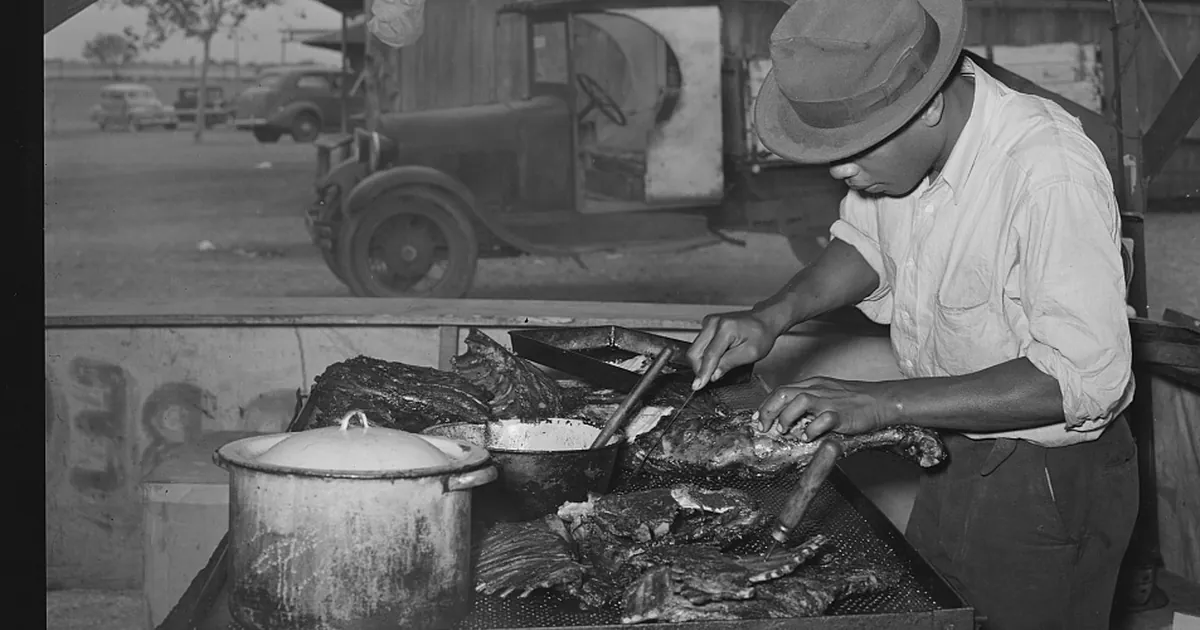
The word is older than the country
Long before Europeans arrived, the Taíno people of the Caribbean cooked and dried meat over fire on raised wooden frames. The Taíno word for that framework, barabicu, passed into Spanish as barbacoa. The Spanish historian Gonzalo Fernández de Oviedo y Valdés is widely credited with the first print appearance of the word in 1526, describing the frames he saw in the islands.
A barbacoa originally meant a raised wooden scaffold rather than a meal. Spanish writers used the word for racks that dried meat, platforms that stored grain, and even a kind of bed. Its meaning shifted from the structure to the cooking method later.
From scaffold to supper: the method moves north
As Spanish expeditions moved out of the Caribbean and north onto the mainland, they carried the cooking technique with them, and the idea eventually reached the English colonies as far north as Virginia. English-language records catch up in the 1650s: the writer Richard Ligon spelled it "barbycu" in 1657, describing a raised platform in Barbados, and by 1661 an English account describes Indigenous people near the Chesapeake using a stick structure to dry and smoke fish over fire.
Somewhere in that colonial Southeast, the raised frame met a new piece of engineering: the pit. Instead of cooking above the fire on a rack, cooks began digging a trench, burning wood down to coals in it, laying whole animals or large cuts across it, and mopping them with a thin, sharp sauce as they cooked. Food historian Joseph Haynes, whose work on Virginia barbecue is the most detailed attempt to document this, argues that this trench-and-coals method is the actual invention point of American barbecue, created by enslaved West African cooks working alongside European and Indigenous neighbors.
The French folk etymology
You will still meet the claim that "barbecue" comes from the French barbe à queue, "whiskers to tail," supposedly describing a pig roasted whole. The story dates to 1829, and virtually no scholar of the word accepts it. The documented chain from barabicu to barbacoa to barbecue runs a century earlier and leaves no gap that French needs to fill.
Colonial Virginia turns barbecue into a public event
Pigs are the reason the colonial South fell in love with barbecue. Spanish explorers had released pigs in the Southeast in the 1500s, and unlike cattle the animals thrived, multiplied, and went feral. By the colonial period pork was the cheapest meat in the region, and a whole hog was the right size to feed a crowd. Barbecue became how the South celebrated: elections, court days, Independence Day, church homecomings, and militia musters all got a pit.
These were enormous operations. An 18th or 19th century political barbecue might cook dozens of hogs overnight in trenches dug at the site. The skilled, physically brutal work was done overwhelmingly by enslaved Black cooks, free Black cooks, and poor white laborers.
What early barbecue looked like
| Element | Then (1600s to 1800s) | Now |
|---|---|---|
| Fuel | Wood burned down to coals in the pit itself | Charcoal, splits, pellets, or gas-fired offsets |
| Meat | Whole hogs, occasionally beef or mutton | Specific cuts: brisket, shoulders, ribs |
| Sauce | Thin vinegar-and-pepper mops applied during the cook | Regional: vinegar, tomato, mustard, or mayo-based |
| Cooking vessel | Trench dug into the ground at the event site | Above-ground steel, ceramic, or masonry smokers |
| Occasion | Public feasts: elections, holidays, picnics | Restaurants, competitions, and weekends off |
Modern ceramic and steel smokers solve the same basic problems those pit crews faced: containing the fire, controlling airflow, and holding steady heat through a long cook.
Why the origin question still matters
Barbecue history is not trivia. Deciding whose story gets told decides whose contribution gets remembered, and for most of the 20th century the Black cooks who built the tradition were written out of it while the restaurants they trained stayed open. That correction is underway now, led by historians like Adrian Miller and pitmasters like Ed Mitchell, and it is worth reading their work directly. Start with the Black pitmasters who built American barbecue and the way regional styles diverged from that common ancestor.
Where this history comes from
This article sticks to claims that appear in the historical record, and where historians disagree it says so. If you want to go deeper, these are good places to start:
Common questions about the history of barbecue
Did barbecue originate in the Caribbean or the American South?
The word did: barabicu, rendered barbacoa in Spanish, is Taíno and appears in print by 1526. The specific American method, coals in a dug pit with whole animals and vinegar mops, took shape in the colonial Southeast, and one historian argues enslaved African cooks invented it there working alongside European and Indigenous neighbors. Both halves are true at once.
Does barbecue come from the French barbe à queue?
Almost certainly not. The whiskers-to-tail story dates to 1829, and virtually no scholar of the word accepts it. The documented chain from Taíno barabicu through Spanish barbacoa runs a century earlier and leaves no gap for French to fill.
When did barbecue first appear in English?
The writer Richard Ligon spelled it barbycu in 1657, describing a raised platform in Barbados. By 1661 an English account describes Indigenous people near the Chesapeake using a stick structure to dry and smoke fish over fire.
What meat was first barbecued in America?
Pork. Spanish explorers released pigs in the Southeast in the 1500s, the animals thrived and went feral, and by the colonial period a whole hog over a pit was the celebration meal of the region because it was the cheapest meat available.
Related guides
The Black Pitmasters Who Built American Barbecue
From enslaved pit cooks to Henry Perry in Kansas City: the Black cooks who created, carried, and commercialized American barbecue, and why their names faded.
Read the guideWhy Barbecue Is Different in Every Region
Carolina whole hog, Memphis ribs, Kansas City everything, Texas brisket. Each regional style is a record of who settled there and what meat cost.
Read the guideHow to Use a Smoker for the First Time
Learn how to run your first smoke: choose a forgiving cut, hold 225–250°F at grate level, expect the stall, check doneness, and rest before serving.
Read the guide