
COMPARISONS · BRISKET SETUP
Offset Smoker vs Pellet Grill: Which Is Better for Brisket?
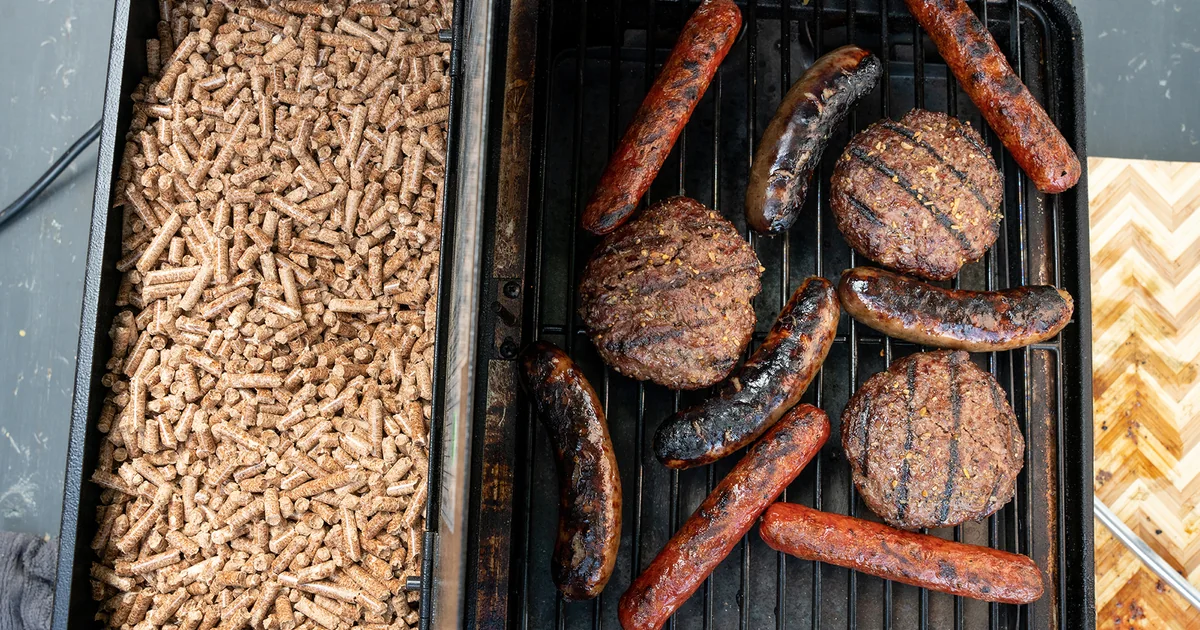
For brisket, an offset and a pellet grill ask very different things from the cook. The choice comes down to how much fire-tending you want and how much smoke flavor you expect.
Why this comparison is different from other smoker types
Brisket makes this comparison easy to notice because it cooks for twelve to eighteen hours and spends all of that time building bark and smoke flavor. See brisket internal temp for the full doneness breakdown. That is why offset versus pellet is argued over specifically for brisket far more than for ribs or chicken, where the difference matters less.
Offset: the traditional choice
An offset burns wood splits in a side firebox, and that live wood fire is what produces the deep mahogany bark and pronounced smoke ring competition brisket cooks chase. The cost is constant attention: a stick burner typically needs a fresh split roughly every 30 to 45 minutes to hold steady, which over a 12-to-18-hour brisket means either staying up through the night or accepting some temperature drift while you sleep.
Pellet: consistency without the tending
A pellet grill holds a set temperature by itself, which suits a 12-plus-hour brisket. Its auger and digital controller feed pellets automatically, so you can start the cook, go to bed, and wake up to a smoker that held 225°F all night without anyone feeding it. The trade-off is flavor: pellet grills generally produce a milder smoke profile and a somewhat softer bark than an offset, though the gap has narrowed with newer high-temperature and smoke-boost designs.
Side by side for brisket specifically
| Offset | Pellet grill | |
|---|---|---|
| Bark and smoke ring | Deepest, most traditional | Good, but generally milder and slightly softer |
| Temperature consistency | Requires active management | Automatic, holds steady for hours unattended |
| Overnight cook | Needs tending or an automated fan controller | Can run unattended overnight |
| Learning curve | Steepest of the common smoker types | Lower; closer to setting an oven |
The stall does not care which one you use
Whichever you pick, brisket will still hit the stall around 160°F and needs the same butcher paper or foil decision at that point. Smoker type changes the flavor and the fire-management workload, not the internal-temperature target or the need to cook past the stall.
How to decide for your next brisket
- Want the deepest bark and are willing to tend a fire through the night? Offset.
- Want to sleep through a 14-hour cook and accept a slightly milder smoke? Pellet.
- New to brisket entirely? A pellet grill removes one major variable (temperature drift) while you are still learning everything else about the cut.
For the broader comparison across every smoker type, see charcoal vs gas vs pellet smokers.
Common offset and pellet questions
Does a pellet grill brisket taste as good as an offset brisket?
It is close but generally not identical. Pellet grills tend to produce a milder smoke flavor and a somewhat softer bark than an offset, though modern pellet grills with smoke-boost settings have narrowed the difference.
Can I leave a pellet grill unattended overnight for brisket?
Yes, that is one of the main advantages. The digital controller holds a set temperature automatically, so a pellet grill can run through the night without anyone feeding fuel, unlike an offset.
How often do you need to feed an offset smoker?
Typically every 30 to 45 minutes with a fresh wood split, to keep the fire and temperature steady. This is the main trade-off against a pellet grill for a long cook like brisket.
Is an offset smoker worth it just for brisket?
If maximum traditional bark and smoke ring matter most to you and you are willing to actively tend the fire for the full cook, yes. If consistency and being able to walk away matter more, a pellet grill is the easier choice.
Related guides
Brisket Internal Temp: When Is Brisket Done?
Brisket is done around 203°F internal, but that number is only half the story. The target temp, why tenderness matters more, and the stall.
Read the guide ↗Brisket Fat Side Up or Down? Point It at the Fire
Run fat side down on pellet grills and drums, and up on most offsets. The cap shields the brisket from the strongest heat while rendered fat runs off.
Read the guide ↗Charcoal vs Gas vs Pellet vs Electric Smokers: Which Should You Buy?
Charcoal and offset give traditional flavor but need attention. Pellet grills hold steady with less tending. Choose based on how much fire-tending you want.
Read the guide ↗The Meat Stall Explained: Why Smoked Meat Stops Rising in Temperature
The stall is when a brisket or pork butt parks at the same temperature for hours. Why it happens, how long it lasts, and the three ways through it.
Read the guide ↗