
COMPARISONS · CHOOSING A SMOKER
Charcoal vs Gas vs Pellet vs Electric Smokers: Which Should You Buy?
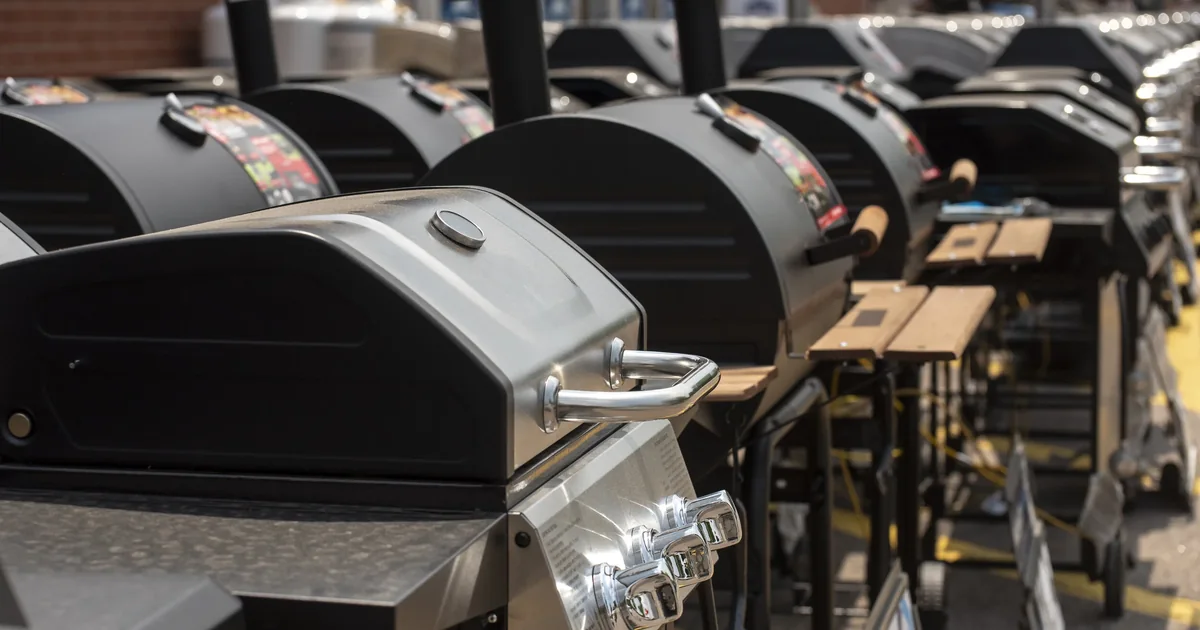
Smoker types differ in how you control the fire, how often you tend it, and how much smoke they produce. Compare those daily differences before you choose one.
What differs between smoker types
Every smoker type can hit the same 225 to 250°F range and produce good barbecue. What differs is how much attention the fire demands, how much smoke flavor you get, and how forgiving the temperature control is while you are still learning.
| Type | Fire management | Smoke flavor | Best for |
|---|---|---|---|
| Offset (stick burner) | High; feed wood splits every 30 to 45 minutes | Strongest, most traditional | Experienced cooks chasing maximum bark and smoke ring |
| Charcoal (kettle, barrel, kamado) | Moderate; vents manage airflow and temp | Strong | Hands-on cooks who want real fire without a full stick burner |
| Pellet grill | Low; a digital controller feeds pellets automatically | Mild to moderate | Beginners and anyone who wants to walk away for hours |
| Gas | Low; a knob controls the flame | Mild, from wood chips in a smoker box | Convenience and fast startup over deep smoke flavor |
| Electric | Lowest; a heating element holds temperature | Mildest | Apartments, patios, and the simplest possible temperature control |
Offset smokers: the traditional choice
An offset, or stick burner, burns wood splits (or charcoal plus wood) in a firebox set off to the side of the main chamber. It produces the most traditional wood-fired flavor and the deepest bark, and it is the type most competition brisket cooks reach for. The cost is attention: a stick burner needs a new split fed roughly every 30 to 45 minutes to hold a steady temperature, which makes an unattended overnight cook difficult without an automated fan controller. It has the steepest learning curve of any type here.
Two follow-on decisions have their own pages: the offset versus pellet comparison for brisket, and which way the fat cap faces on a cooker where the heat comes from one end.
Charcoal smokers: real fire, less tending
Kettle grills set up for indirect heat, barrel smokers, and ceramic kamado-style cookers all fall in this camp. They burn charcoal, often supplemented with wood chunks for smoke, and you manage temperature with intake and exhaust vents rather than feeding fuel constantly. A well-built kamado in particular holds temperature for hours on one load thanks to its thick ceramic walls. Charcoal sits between offset and pellet: real fire and real smoke flavor, without needing a split fed every half hour.
Pellet grills: the easiest to hold steady
A pellet grill auto-feeds compressed wood pellets from a hopper into a fire pot, controlled by a digital thermostat the same way an oven is. That makes holding 225°F for 12 hours nearly automatic, which is why pellet grills have become a popular first smoker. The trade-off is smoke flavor: pellet grills tend to produce a milder smoke profile and a softer bark than a stick burner or straight charcoal, though the gap has narrowed as pellet grill designs have improved.
Gas and electric: convenience first
Gas and electric smokers trade real fire for a knob, and buy predictability with it. Gas uses a propane burner with wood chips in a smoker box for flavor; electric uses a heating element the same way. Both start faster and hold temperature more steadily than charcoal or offset, and electric in particular suits apartments, patios, or anywhere an open flame is not practical. Smoke flavor is the mildest of any type here, since neither burns wood as its primary heat source.
How to choose
- Want the least hands-on fire management? Pellet grill.
- Want real fire and real smoke without feeding it constantly? Charcoal, especially a kamado-style cooker.
- Chasing the most traditional bark and smoke ring, and willing to tend a fire? Offset.
- Cooking on an apartment patio or want the simplest possible controls? Electric or gas.
Whichever type you land on, the guidance does not change: hold your target pit temperature, watch the internal temperature and feel rather than the clock, and expect the stall on long cooks. If this is your first smoker, the starter kit guide and how to use a smoker for the first time cover everything else you need alongside it.
Common smoker buying questions
What is the easiest smoker for a beginner?
A pellet grill is generally the easiest for beginners because a digital controller holds the pit temperature automatically, removing most of the fire-management learning curve.
Do pellet grills taste as good as charcoal or offset smokers?
Pellet grills produce a milder smoke flavor and a somewhat softer bark than charcoal or offset smokers, though the gap has narrowed with newer designs. Many people find the flavor difference small compared to the convenience gained.
What is the difference between a charcoal smoker and an offset smoker?
A charcoal smoker (kettle, barrel, or kamado) manages heat mainly through vents on a single chamber. An offset, or stick burner, burns wood splits in a separate side firebox and needs fuel added every 30 to 45 minutes, giving the strongest traditional smoke flavor at the cost of the most attention.
Is a gas or electric smoker good enough for real barbecue?
Yes, both can produce good results, and both offer simple, predictable temperature control. The trade-off is a milder smoke flavor than charcoal or offset, since neither burns wood as the primary heat source.
Related guides
How to Use a Smoker for the First Time
Learn how to run your first smoke: choose a forgiving cut, hold 225–250°F at grate level, expect the stall, check doneness, and rest before serving.
Read the guide ↗Offset Smoker vs Pellet Grill: Which Is Better for Brisket?
An offset gives brisket the most traditional bark and smoke ring but demands constant tending. A pellet grill holds temp automatically for 12-plus hours.
Read the guide ↗