
TECHNIQUE · THE SMOKE RING
The Smoke Ring: What It Is and How to Get One
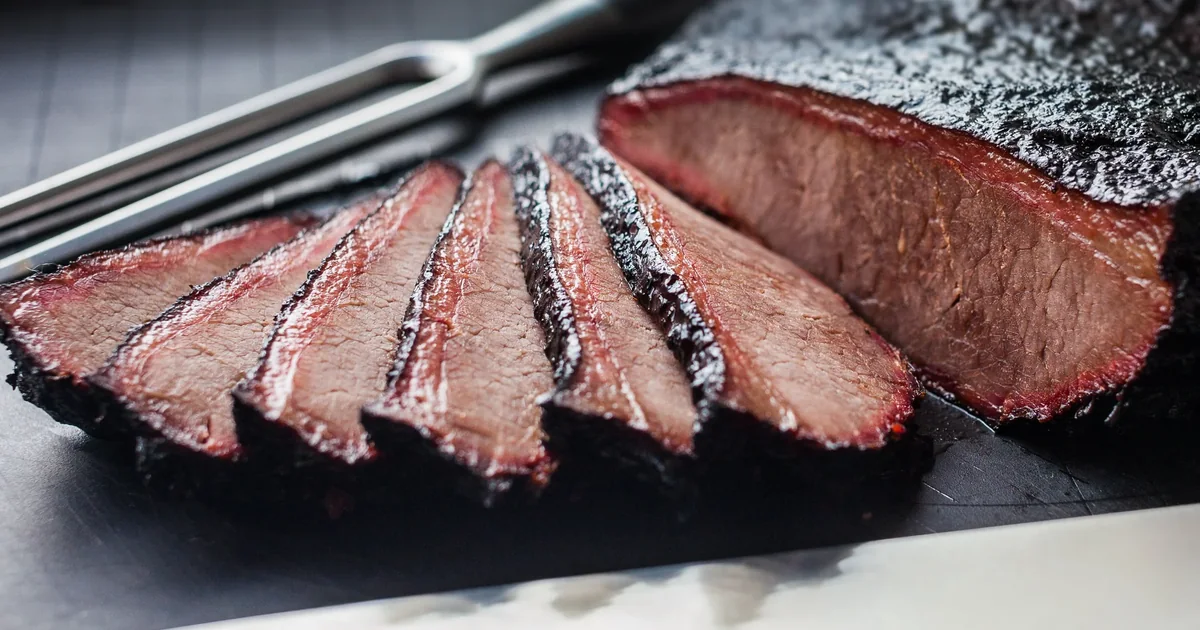
The pink ring under the bark comes from combustion gases reacting with myoglobin in the meat. It is not smoke soaking into the meat, and it does not change how the food tastes.
What causes it
Burning wood and charcoal release gases, notably nitric oxide and carbon monoxide. On the surface of the meat, those gases react with myoglobin, the protein that gives raw meat its color, and fix it as a stable pink. Normally myoglobin turns gray or brown as meat cooks; where these gases penetrate the outer layer, they lock the pink in place instead. That fixed pink band is the smoke ring. It is a chemical reaction on the surface, not smoke flavor traveling inch-deep into the meat.
Why it is only a thin band
The reaction only happens in the cooler outer layer of the meat and only until the surface heats past roughly 140 to 170°F, after which the myoglobin sets and stops reacting. That is why the ring is a defined band a few millimeters deep rather than color running all the way through: once the outside gets hot enough, the window closes.
How to encourage a better ring
- Use charcoal or wood, not gas or electric. Real combustion produces far more of the gases that form the ring; gas and electric smokers tend to give a fainter ring even with wood chips added.
- Keep the surface moist early. A damp surface helps the gases dissolve and react, which is part of why spritzing during the first hours can help. Patting a cut dry right before it goes on works against the ring.
- Do not rush the early temperature. The ring forms while the surface is still cool, so a blistering-hot start closes the window faster. Standard low-and-slow temperatures give it time.
Things that do not deepen it
- More smoke does not equal a bigger ring. The ring is about combustion gases and surface chemistry, not the thickness of visible smoke; piling on wood mostly risks a bitter, over-smoked flavor.
- It is not a measure of smoke flavor. Two briskets can taste equally smoky with very different rings.
- Curing salt can fake it. A little pink curing salt in the rub produces an artificial ring through the same chemistry, which is why the ring is not a reliable badge of skill and why competition judging has largely moved away from rewarding it.
The ring rides along with the same cook that gets you tender meat. Focus on holding a clean fire and hitting your internal temperature targets, and let the ring be a bonus rather than the goal.
Common smoke ring questions
What causes a smoke ring?
Gases from burning wood and charcoal, nitric oxide and carbon monoxide, react with myoglobin on the surface of the meat and fix its pink color before heat can turn it gray. It is a surface chemical reaction, not smoke soaking into the meat.
Does a smoke ring affect the flavor?
No. The smoke ring is purely cosmetic. Flavor comes from the bark, smoke, and rendering fat, not from the pink ring. A faint ring does not mean the meat is any less smoky or tasty.
How do I get a bigger smoke ring?
Cook over real charcoal or wood rather than gas or electric, keep the meat surface moist in the early hours (spritzing helps), and use standard low-and-slow temperatures so the ring has time to form before the surface sets.
Can you fake a smoke ring?
Yes. A small amount of pink curing salt in the rub creates an artificial ring through the same chemistry. That is one reason the ring is considered cosmetic and is no longer a reliable sign of skill.
Related guides
Best Wood for Smoking Meat, by Cut
The wood pairing for every classic smoker cut, from post oak on brisket to alder on salmon, plus strong vs mild woods and how much to use.
Read the guide ↗The Meat Stall Explained: Why Smoked Meat Stops Rising in Temperature
The stall is when a brisket or pork butt parks at the same temperature for hours. Why it happens, how long it lasts, and the three ways through it.
Read the guide ↗Brisket Internal Temp: When Is Brisket Done?
Brisket is done around 203°F internal, but that number is only half the story. The target temp, why tenderness matters more, and the stall.
Read the guide ↗