
BRISKET · COOK RESCUE
Brisket Bark Turned Soft After Wrapping? What to Do
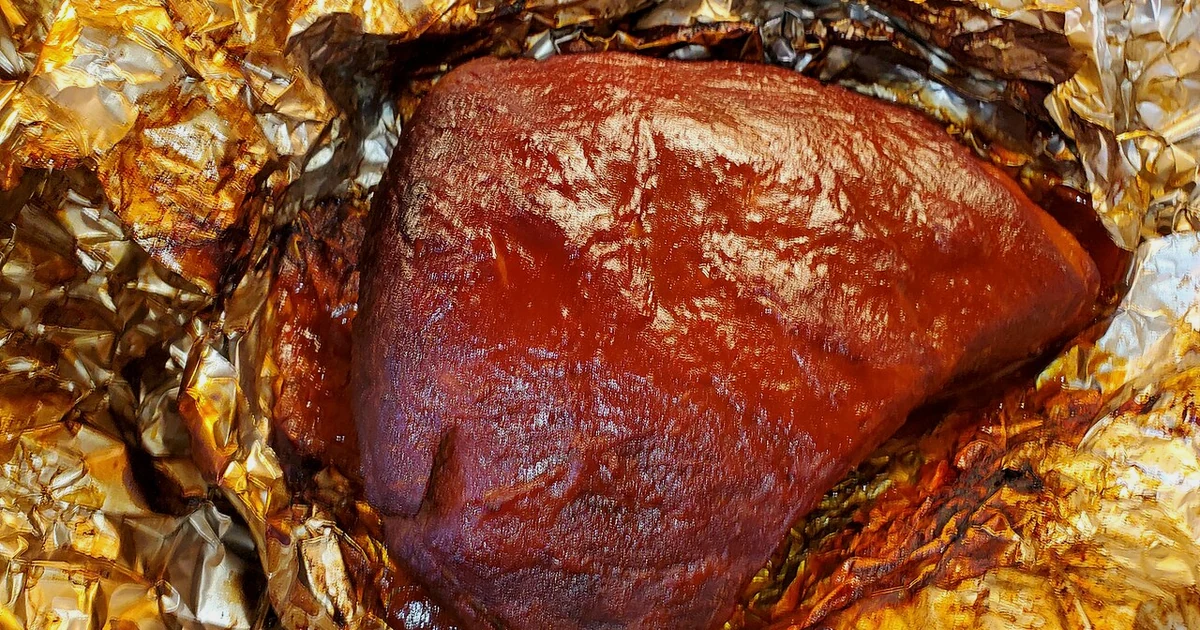
Photo by Corvair Owner (CC BY-SA 2.0), cropped and resized.
Soft bark after a wrap is usually a texture problem, not a ruined brisket. Finish the interior first, then use a short dry finish only if the bark needs it.
Do this first
Check the flat before you chase the bark. If it is still tight when you probe it, keep the brisket wrapped and finish the cook. If the flat is already tender, open the wrap carefully, let steam escape for 5 to 10 minutes, and look at the surface again. A short unwrapped finish at 250 to 275°F can dry and firm a wet bark, but keep it brief so the lean flat does not dry out.
Why wrapping softens bark
Wrapping traps moisture that would otherwise evaporate from the surface. Steam condenses against the bark, which helps push through the stall but softens the crust. Foil seals more completely than paper, and pooled rendered fat or added liquid can soften it further. Wrapping before the bark has set creates the same problem from the start.
Soft bark does not automatically mean the brisket is dry, tough, or unsafe. It is mainly a surface-texture issue. The seasoning and smoke are still there, and some cooks prefer the softer bark that comes from foil. The when-to-wrap guide explains how to wait for a firm surface next time.
Choose the move that matches the brisket
| What you see | What it means | Next move |
|---|---|---|
| Bark is soft and the flat is tight | The cook is not finished | Keep it wrapped and continue cooking |
| Bark is wet and the flat probes tender | Steam or liquid softened the crust | Vent, then use a short dry finish if needed |
| Bark is soft but not wet | The wrap or hold changed the texture | Rest and slice; do not overcook for appearance |
| Bark is firm enough after opening | No rescue is needed | Rest the brisket and leave it alone |
If the flat is not tender yet
Keep the package closed and keep cooking. Unwrapping a tight brisket releases heat and moisture, but it does not restore the bark. Hold the pit around 225 to 250°F if the schedule has room. If dinner is tight, bring the wrapped pit to around 275°F or finish the wrapped brisket in a 275°F oven. The brisket taking-too-long guide covers that recovery choice.
Start checking the flat around 195°F in several places. Pull when the probe slides in with very little resistance, often near 203°F. Temperature tells you when to start checking; the brisket internal temperature guide explains why tenderness gets the final say.
If the flat is already tender
Open the wrap and let the trapped steam escape. Keep the brisket on a tray or rack instead of letting it sit in its liquid. After 5 to 10 minutes, accept the surface if it looks good. If it is still visibly wet, return it unwrapped to a 250 to 275°F pit for 10 to 20 minutes. Stop when the surface looks drier. The goal is surface moisture removal, not more cooking for its own sake.
If the brisket is going into a hold, vent it before wrapping again so steam does not keep working on the crust. Keep the finished brisket at or above 140°F while you wait. The brisket rest and hold guide covers the longer hold decision.
Paper, foil, and liquid
Butcher paper lets some steam escape, so it usually preserves a firmer bark. Foil seals tightly and is useful when speed or moisture matters more than the crust. Neither wrap is wrong. The mistake is expecting a fully sealed package to keep the surface dry. See the butcher paper versus foil guide for the full tradeoff.
- Using foil? Skip added liquid unless you have a specific reason to use it. The brisket already releases moisture and rendered fat.
- Using paper? Use unwaxed food-grade paper and wrap only after the bark is dark and stable.
- Liquid pooled in the package? Finish the brisket first. Do not pour it over the bark and expect the crust to firm.
What not to do
- Do not unwrap a tight brisket just to inspect the bark. It loses heat before the interior is ready.
- Do not blast an unwrapped brisket at high heat. The flat and edges can dry before the surface improves.
- Do not scrape off the soft bark. You remove seasoning and meat without fixing the moisture problem.
- Do not keep spritzing after the wrap comes off. A dry finish needs dry heat.
- Do not hold it lukewarm. Soft bark is a quality issue; unsafe time in the 40 to 140°F range is a safety issue.
Your next move
Probe the flat now. If it is tight, close the wrap and finish the brisket. If it is tender, vent it and choose between accepting the bark or giving it a short dry finish. Then rest before slicing. If the serving time is already close, enter the current temperature, pit temperature, wrap status, and serving time into the Cook Rescue calculator instead of opening the package without a plan.
Common soft-bark rescue questions
Why did my brisket bark turn soft after wrapping?
Wrapping traps steam against the bark. Foil seals more tightly than butcher paper, and pooled rendered fat or added liquid can soften the surface further. Wrapping before the bark has set can also leave a weak crust.
Should I unwrap brisket if the bark is soft?
Only after the flat is tender. If it is still tight, keep the brisket wrapped and finish the cook. Once tender, vent the steam and decide whether a short unwrapped finish is worth the risk of drying the flat.
Can you make soft brisket bark firm again?
You can often improve it, but not guarantee a full recovery. Vent the tender brisket, then use a 250 to 275°F unwrapped finish for about 10 to 20 minutes while watching the flat.
Does foil make brisket bark softer than butcher paper?
Usually. Foil seals completely and traps more steam, while unwaxed butcher paper lets some moisture escape. Foil is faster; paper generally preserves a firmer bark.
Is soft brisket bark a safety problem?
No. Soft bark is a texture issue. The safety concern is handling the finished brisket correctly: keep it at or above 140°F during a hold and avoid unsafe time in the 40 to 140°F danger zone.
Sources and safety guidance
Food-safety numbers on this page come from published guidance, not from Pitwright’s own testing. Barbecue targets, timings, and technique are craft, and are described as such in the text.
- Safe Minimum Internal Temperature ChartUSDA Food Safety and Inspection ServiceMinimum safe internal temperatures: 145°F plus a 3-minute rest for whole beef, pork, and lamb; 145°F for seafood; 165°F for poultry; and label-specific ham cooking and reheating targets.
- Danger Zone (40°F to 140°F)USDA Food Safety and Inspection ServiceHot food held for later service stays at 140°F or above; food left between 40°F and 140°F is limited to 2 hours total, or 1 hour above 90°F ambient.
Related guides
Butcher Paper vs Foil: Which Wrap Wins the Texas Crutch
Butcher paper breathes and protects bark; foil seals completely and cooks fastest. When to reach for each, and when to skip the wrap entirely.
Read the guide ↗When to Wrap Brisket, Ribs, and Pork Butt
Wrap after the bark sets, when the surface is ready. Timing guidance for brisket, ribs, pork butt, and beef ribs.
Read the guide ↗How Bark Forms on Smoked Meat
Bark is built by dehydration, smoke deposition, Maillard browning, and a fused spice crust. What each contributes, and what wrapping does to it.
Read the guide ↗Brisket Taking Too Long? What to Do Now
Brisket taking too long? Check the pit, handle the stall, wrap at the right time, and recover a late dinner without pulling tough meat early.
Read the guide ↗Brisket Internal Temp: When Is Brisket Done?
Brisket is done around 203°F internal, but that number is only half the story. The target temp, why tenderness matters more, and the stall.
Read the guide ↗