
BRISKET · COOK RESCUE
Brisket Taking Too Long? What to Do Now
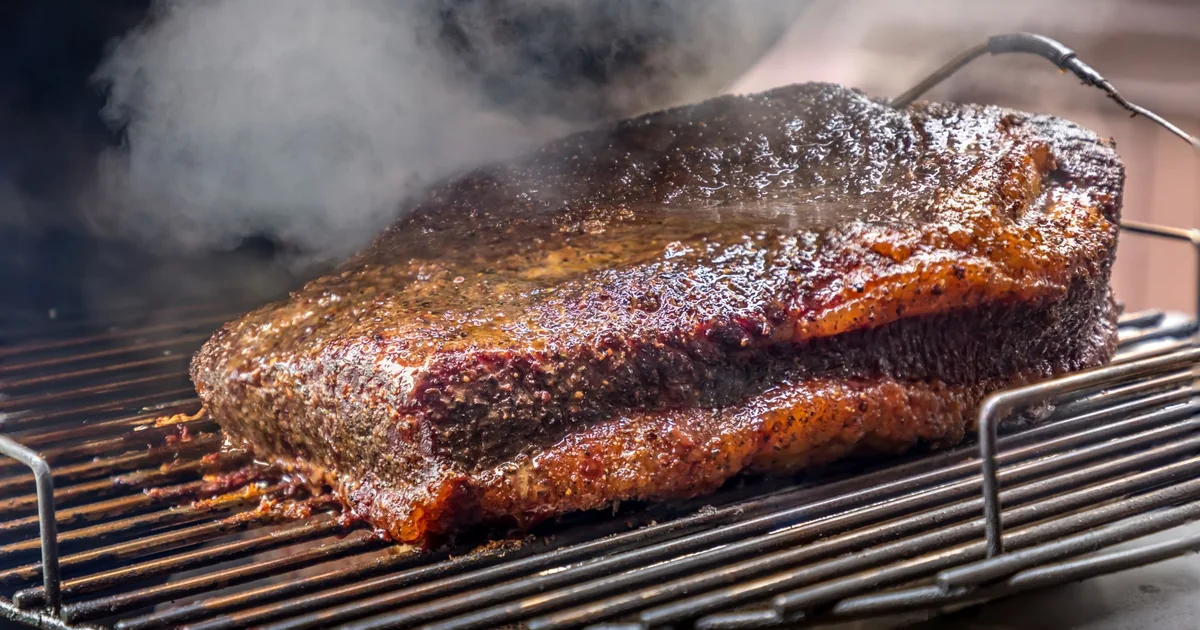
A brisket that is running late usually needs a diagnosis, not panic. Check the fire and the reading, then choose the smallest change that buys back time without turning the flat tough.
Do this first
Keep cooking the brisket. A dinner deadline does not make collagen tender, so pulling early trades a late meal for tough meat. Check the actual pit temperature at grate level, confirm the probe is in the thickest part of the flat, and then decide whether the cook is in a normal stall or is genuinely running cold. If the bark is set and the schedule is tight, wrap it and bring the wrapped pit to around 275°F. Start probing the flat in the mid-190s and pull only when it feels tender.
Find out whether it is really late
Before changing the cook, check the parts of the setup that can make a normal brisket look broken. Measure the pit at grate level, not only with the dome gauge. Then check the probe location: the flat is the lean section that needs attention, while a probe sitting in a fat seam can read ahead of the meat. The smoker temperature control guide covers the fire-side fixes if the grate is below target.
| Check | What to look for | What it means |
|---|---|---|
| Pit at grate level | About 225 to 250°F | The normal brisket range; a flat reading below it will extend the cook |
| Probe position | Thickest part of the flat, away from a fat seam | A useful reading for the lean section that finishes first |
| Internal temperature | About 150 to 170°F and barely moving | Probably the normal stall, not a dead fire |
| Bark | Dark, dry, and staying put under a light touch | Ready for a wrap if the schedule needs one |
If the brisket is in the stall
A brisket can sit in the 150 to 170°F range for hours while moisture evaporates from the surface. That is the meat stall, and it does not automatically mean the fire failed. If the bark is still soft and dinner is not close, leave the brisket unwrapped a little longer. If the bark is set and you need the cook to move, wrap now.
- Bark set, time matters most: use foil for the fastest push through the stall.
- Bark set, but you still want a firm surface: use unwaxed butcher paper.
- Bark still soft and you have room: wait before wrapping so steam does not smear the surface.
The butcher paper versus foil guide explains the bark tradeoff. In a genuinely late cook, protecting every bit of bark matters less than getting the interior tender, but wrapping too early still gives you a soft exterior for no reason.
If it is wrapped and still behind
Keep the wrapped brisket on a steady heat source. If the pit is below 275°F and dinner is now tight, raising the wrapped pit to around 275°F is a reasonable recovery move. If the smoker fire is unstable, a 275°F oven can finish the wrapped brisket; at that point you are supplying heat, not trying to add more smoke. Do not leave the brisket unwrapped while making a large temperature jump, because the exposed flat can dry or scorch before the center catches up.
When to start probing
Once the flat reaches roughly 195°F, begin checking in several spots with a thin probe. Around 203°F is a common brisket finish point, but it is a texture target, not a command. The flat may become tender a few degrees below or above it. The brisket internal temperature guide covers the point-versus-flat difference; for this rescue, use the flat as the deciding section.
| Reading | Decision |
|---|---|
| Below about 195°F | Keep cooking; it is too early to make a tenderness call |
| Around 195 to 205°F | Probe the flat in several places, not a single spot |
| Tender probe feel | Pull, vent briefly if very hot, then rest |
| Still tight | Keep cooking, even if the number has passed 203°F |
When dinner is closer than the brisket
A brisket can be safe before it is tender. The USDA minimum for a whole cut of beef is 145°F with a three-minute rest. A brisket’s roughly 203°F target is about collagen and texture. Do not pull at 145°F, 180°F, or any other number simply to meet the serving time. If the flat is still tight, keep cooking and move dinner back or serve another dish while it finishes.
When it finally probes tender, rest it for at least an hour. If the meal has moved again, the brisket resting and holding guide explains how to keep a wrapped brisket at or above 140°F, and the rest and hold calculator gives you a live hold window instead of a guess.
What not to do
- Do not pull it early. Resting cannot turn undercooked collagen tender.
- Do not trust the dome gauge alone. Confirm the grate temperature with a probe near the meat.
- Do not open the lid every few minutes. Each look costs heat and makes the schedule worse.
- Do not make an extreme unwrapped heat jump. Wrap first if speed is the priority.
- Do not hold it lukewarm. Keep a finished brisket at or above 140°F, or track the time it spends in the 40 to 140°F danger zone.
Your next move
If the cook is already underway, enter the cut, internal temperature, pit temperature, wrap status, and serving time into the Cook Rescue calculator. It gives a remaining-time window and tells you whether the schedule is comfortable, tight, or late. For the next cook, build a buffer with the brisket start-time calculator instead of planning the finish to land at dinner.
Common brisket rescue questions
Why is my brisket taking so long?
The usual causes are a normal stall, a pit running below its target at grate level, or a probe sitting in a fat seam instead of the flat. A brisket can stall between 150 and 170°F for hours. Verify the fire and probe before changing the cook.
Can I raise the temperature to finish a brisket faster?
Yes, after wrapping. If the schedule is tight, raising the wrapped pit to around 275°F, or finishing the wrapped brisket in a 275°F oven, can recover time. Avoid a large heat jump while the brisket is unwrapped.
Should I wrap a brisket that is running late?
Wrap once the bark is dark, dry, and set. Use foil when speed matters most and butcher paper when you want to preserve more bark. If the bark is still soft and you have time, wait a little longer.
What if my brisket is not done by dinner?
Keep cooking until the flat probes tender, even if dinner has to move. A brisket pulled early stays tough; resting does not finish the collagen conversion. Serve another dish or delay the meal rather than slicing a tight brisket.
What temperature is brisket done at?
Start probing around 195°F. Many briskets become tender near 203°F, but the probe decides. The 145°F USDA figure is a whole-beef safety minimum, not a brisket tenderness target.
Sources and safety guidance
Food-safety numbers on this page come from published guidance, not from Pitwright’s own testing. Barbecue targets, timings, and technique are craft, and are described as such in the text.
- Safe Minimum Internal Temperature ChartUSDA Food Safety and Inspection ServiceMinimum safe internal temperatures: 145°F plus a 3-minute rest for whole beef, pork, and lamb; 145°F for seafood; 165°F for poultry; and label-specific ham cooking and reheating targets.
- Danger Zone (40°F to 140°F)USDA Food Safety and Inspection ServiceHot food held for later service stays at 140°F or above; food left between 40°F and 140°F is limited to 2 hours total, or 1 hour above 90°F ambient.
Related guides
How Long to Smoke a Brisket: Per-Pound Times That Add Up
Plan about 75 minutes per pound at 225 to 250°F: a 12 lb packer runs about 15 hours. Per-pound times, why small flats break the rule, and when to start.
Read the guide ↗The Meat Stall Explained: Why Smoked Meat Stops Rising in Temperature
The stall is when a brisket or pork butt parks at the same temperature for hours. Why it happens, how long it lasts, and the three ways through it.
Read the guide ↗When to Wrap Brisket, Ribs, and Pork Butt
Wrap after the bark sets, when the surface is ready. Timing guidance for brisket, ribs, pork butt, and beef ribs.
Read the guide ↗Brisket Internal Temp: When Is Brisket Done?
Brisket is done around 203°F internal, but that number is only half the story. The target temp, why tenderness matters more, and the stall.
Read the guide ↗How Long to Rest a Brisket (and How to Hold It for Hours)
Rest a brisket at least 1 hour, ideally 2. How resting works, how the cooler hold keeps a brisket at or above 140°F, and where that hold runs out.
Read the guide ↗