
RIBS · PREP GUIDE
How to Remove the Membrane From Ribs
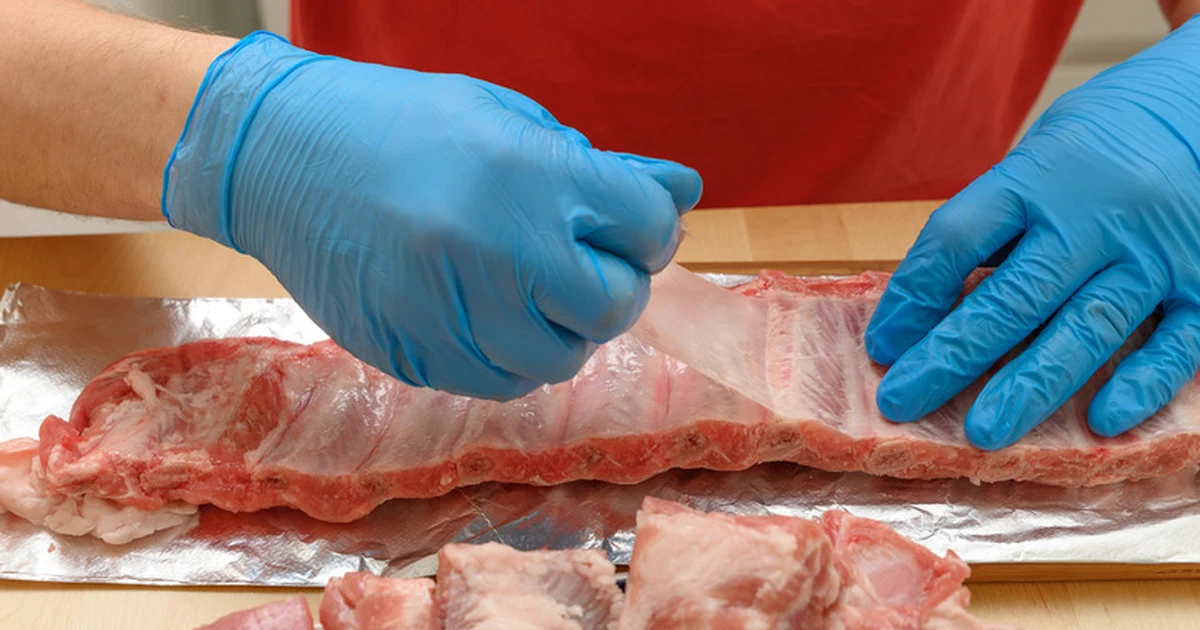
The membrane is a thin sheet that clings to the bone side of a pork rack. Removing it is a short job you can finish before the rub goes on.
Find the membrane
Turn the pork rack bone side up. Look for a thin, shiny, translucent sheet stretched across the bones. The loose flap of meat sometimes sitting on top is the skirt; the membrane is the film beneath it. You are peeling that film, so leave the meat and deeper attached tissue in place.
The sequence here follows Weber’s membrane-removal technique: lift over a bone with a dinner knife, grip with a paper towel, and peel. Weber notes that smaller pieces are normal when the sheet tears.
If the rack is a full spare and you also want the tidy rectangular St. Louis cut, treat that as a separate job. The knife sequence for shaping the slab is covered in how to trim spare ribs to St. Louis style. Work through one task at a time so the rack stays stable and flat.
Loosen the edge
Find a spot at one end where the membrane lifts off a bone. Slide a blunt dinner or butter knife between the membrane and the bone, keeping the flat of the blade against the bone. A sharp point is not needed here and it is more likely to score the meat. Push in a short distance, then lift the handle to raise the membrane off the bone.
Once a small flap stands up, you have a grip point. If the membrane is loose enough to catch with a fingernail, skip the knife and go straight to peeling.
Pull it off with a towel
A dry paper towel gives you grip on a slippery sheet. Pinch the raised flap through the towel with one hand and steady the rack with the other. Peel with a slow, even pull along the length of the rack, following the direction the sheet wants to go. It may release whole or in several pieces, and both are normal.
- Hold the rack flat with your free hand so it does not slide.
- Grip the loosened flap through a dry paper towel.
- Pull steadily toward the opposite end, keeping tension even.
- If it tears, lift a new edge at the next bone and carry on.
Use the knife only to lift an edge. Scraping the whole surface can nick the meat, while a steady peel leaves it intact.
Common mistakes
Avoid chasing every last bit of tissue with a knife tip. Leave a stubborn small patch if removing it would cut away meat. You can trim an accessible chewy bit when serving.
Another is working on a wobbly rack on a slippery board. A rimmed sheet pan, or a damp towel under the board, keeps the rack from skidding while one hand is busy peeling.
When to stop
Stop once the loose sheet is removed. Deeper connective tissue may remain attached to the rack. Leave it alone rather than cutting into meat to make the surface look bare.
If you meet firm resistance or the knife grinds against bone, move to a new spot instead of pushing harder. A knife should never be forced through hard bone.
If the rack is already peeled
Some racks arrive already peeled. Check the package and look for a separate sheet over the bones. If you cannot find one, avoid carving at the surface to prove it is gone. Ask the butcher if you are unsure what remains.
Raw preparation and the danger zone
Removing the membrane is a texture preference. It is not a food-safety step, so leaving it on does not make a rack unsafe to cook or eat. Handle the raw rack the way you would any raw pork: keep it at 40°F or below in the refrigerator, and keep it apart from food you will eat without cooking so juices do not cross over. The FDA cold-storage guidance covers that limit along with the handwashing routine that goes with it.
Limit cumulative time outside refrigeration during transport and raw preparation to 2 hours, or 1 hour when ambient temperature is above 90°F. Discard ribs that exceed that limit or whose time and temperature history you cannot establish. Some toxins survive cooking.
Work promptly and return the covered rack to the refrigerator if you pause. Refrigeration does not reset accumulated exposure. Wash hands with soap and water for at least 20 seconds before and after raw handling, then wash the board and utensils in hot soapy water. These exposure limits apply to raw preparation and storage; a controlled, uninterrupted smoking cook has separate heat and doneness requirements.
Rib membrane questions
Do I have to remove the membrane?
No. Removal is a texture preference. The sheet can be chewy after cooking, so peeling it is useful if you dislike that layer. Removing it does not replace safe handling or proper cooking.
Can I peel the membrane off after cooking?
If the cooked rack has a chewy sheet attached, remove accessible pieces as you portion or eat it. A clean, whole-sheet peel may be difficult after cooking. You do not need to redo the raw preparation sequence.
What if the membrane keeps tearing?
Restart at a new bone where the edge lifts cleanly. Grip through a dry paper towel and pull steadily instead of tugging. Torn strips are normal, so a few pieces are not a sign you did it wrong.
Do baby backs and spare ribs work the same way?
Yes. Both are pork, and both carry a membrane on the bone side that lifts the same way. Beef ribs are a different cut and sit outside this guide.
Sources and safety guidance
The sources below cover food safety. Cooking times and tenderness targets are practical barbecue guidance; check the meat as it cooks.
- Refrigerator Thermometers - Cold Facts about Food SafetyU.S. Food and Drug AdministrationKeep refrigerated food at 40°F or below. Raw meat may not sit at room temperature beyond 2 hours, or 1 hour above 90°F ambient; keep raw foods separate and clean hands and surfaces.
Related guides
How to Trim Spare Ribs to St. Louis Style
Square a full spare rack to St. Louis style: cut the skirt flush, find the natural seam, and remove the cartilage-heavy tips so the slab sits flat.
Read the guideHow Long to Smoke Ribs (Baby Back, St. Louis, and Spare)
Baby back ribs smoke in about 4 to 5 hours, spare or St. Louis in 6 to 7, at 225 to 250°F. The timing by cut, the 3-2-1 method, and how to test for done.
Read the guideBaby Back vs Spare vs St. Louis Ribs: Which Rack to Buy
Baby backs are lean and cook in 4 to 5 hours; spares are meatier and need 6 to 7. St. Louis is a trimmed spare. How to pick the right rack for your cook.
Read the guide