
SCIENCE · FAT RENDERING
How Fat Renders in Barbecue
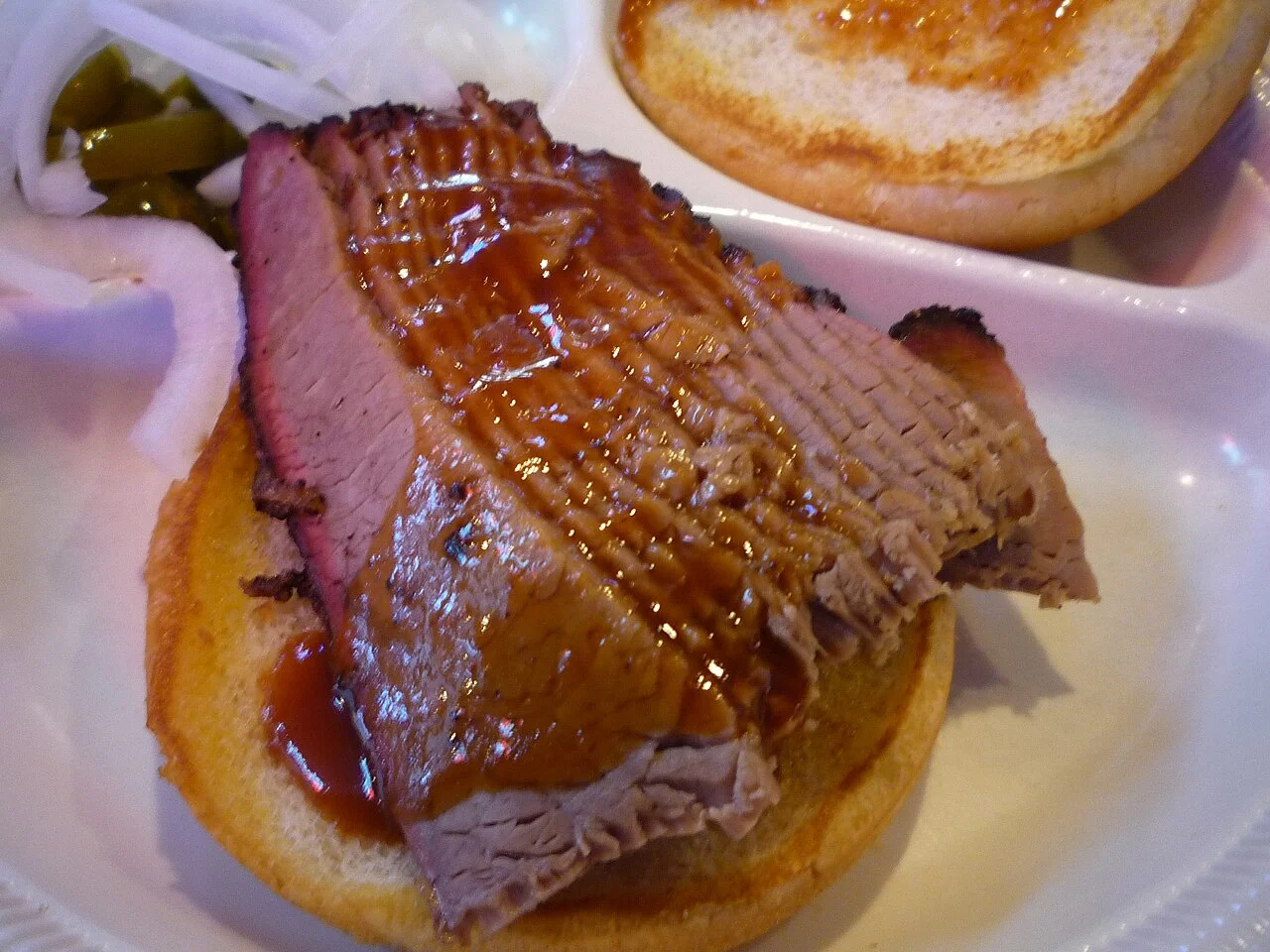
Photo by Wesley Fryer (CC BY 2.0), cropped and resized.
Beef fat may start to soften around 130°F, but a thick fat cap needs more heat and time to render. That difference affects trimming, wrapping, and the way a brisket’s point and flat finish.
Rendering happens across a range of temperatures
Fat in meat is a mixture of many different triglycerides, and each loosens at its own pace. The familiar figures, like beef fat starting to soften around 130°F, describe where softening begins. A real fat cap renders progressively: first it turns glossy, then translucent at the edges, then visibly liquid, over hours. Time at temperature does as much work as the temperature itself, so a fat cap that is still firm at hour four can be fully rendered at hour twelve of the same cook.
Marbling and the fat cap are different jobs
Intramuscular fat, the thin streaks called marbling, sits between the muscle fibers themselves. Surrounded by heat-carrying muscle, it renders in place as the interior warms, basting the fibers from the inside. That is the fat that makes a lean slice taste moist, and no amount of exterior fat substitutes for it.
The exterior fat cap is a separate layer with a different role. Thick and insulating, it slows heat reaching the meat beneath and renders from the edge inward, basting the surface as it goes. Whether to trim it, and how much to leave, is a preference call about insulation and basting; what does not change is that a thick cap needs many hours to render through, and a cook that ends early leaves it rubbery.
Why the point outruns the flat
A whole packer brisket carries two different fat profiles. The point is dense with fat and connective tissue, and it keeps improving as it climbs toward 205 to 210°F. The flat is lean, and past roughly 205°F its muscle fibers start squeezing dry. The brisket temperature guide has you read doneness in the flat and treat the point as the more forgiving end. A fully rendered point can also be cubed for burnt ends.
Crisp skin and burnt ends depend on rendering
Crisp poultry skin depends on removing moisture and giving the fat enough heat to render, so the smoked wings method cooks them through to 175°F and then finishes them over high heat. Burnt ends are cubed, already-rendered point given a second pass to glaze the surfaces, and pork belly burnt ends apply the same trick to the fattiest cut on the pig.
Why low and slow renders better than blasting
At 350°F, the exterior can char before the interior fat renders. A 225 to 250°F pit gives heat more time to move through a whole packer without drying the surface. Save high heat for a finishing step, such as crisping wings or the tri-tip reverse sear. Deep rendering and high heat want different phases of the same day. The same patience pairs with the collagen clock covered in the long-cook science guide; fat and connective tissue both benefit from the time provided by a low-and-slow cook.
How to read rendering at the pit
- The jiggle. A pork butt or brisket that shakes loosely all over is telling you fat and connective tissue have let go. Tight and rigid means keep going.
- The probe slide. Buttery, no resistance: rendered and gelatinized. Grabbing or squeaking: not yet.
- The cap itself. Edges turning translucent and deep brown show the render front advancing. Opaque white means untouched.
Lean cuts have little fat to protect them from overcooking, so the tri-tip guide and the pork tenderloin guide cover lower-temperature finishes instead of 200-plus: tri-tip reaches 125 to 130°F before searing, then at least 145°F before final removal; pork tenderloin reaches 145°F before removal. Rest each for at least 3 minutes.
Common fat rendering questions
What temperature does fat render at?
Softening starts lower, with figures like 130°F quoted for beef fat, but meaningful rendering of a thick fat cap happens gradually from about 160°F upward and completes near simmering interior temperatures over hours. Treat rendering as a range plus time.
Should I leave the fat cap on or trim it off?
It depends what you want it doing. Left on, the cap insulates the meat and bastes the surface as it renders, but it needs hours to convert. Trimmed thin, seasoning reaches the meat directly and the render finishes sooner. Either way, an unfinished cap is rubbery, so match the trim to the length of the cook.
Why is my brisket greasy?
Usually under-rendered fat combined with slicing mistakes. Fat that has not fully rendered pools instead of integrating, and cutting with the grain leaves it in long chewy strips. Cook to true probe-tenderness, rest, then slice across the grain.
Why is the fat cap still rubbery at the end?
Rubbery fat is unrendered fat, which means the cook ran short on time at temperature. Give it longer, wrapped if the bark is set, until the cap turns translucent and the probe slides easily. More heat is not the fix; more time is.
Does injecting fat or broth speed up rendering?
No. Injection adds moisture and seasoning inside the cut, but rendering is a physical change in fat tissue and takes the time it takes. Inject if you want the flavor.
Sources and safety guidance
The sources below cover food safety. Cooking times and tenderness targets are practical barbecue guidance; check the meat as it cooks.
- Safe Minimum Internal Temperature ChartUSDA Food Safety and Inspection ServiceMinimum safe internal temperatures: 145°F plus a 3-minute rest for whole beef, pork, and lamb; 145°F for seafood; 165°F for poultry; and label-specific ham cooking and reheating targets.
Related guides
Brisket Internal Temp: When Is Brisket Done?
Brisket is done around 203°F internal in the flat, when a probe slides in like butter. Point vs flat temps, the 160°F stall, wrapping, and a 225 to 250°F pit.
Read the guideBrisket Fat Side Up or Down? Point It at the Fire
Run fat side down on pellet grills and drums, and up on most offsets. The cap shields the brisket from the strongest heat while rendered fat runs off.
Read the guidePork Belly Burnt Ends: Temp and Timing Guide
Pork belly burnt ends are done around 200°F, jiggly and tender rather than firm. Smoke at 225 to 250°F, cube, then glaze for a final caramelized finish.
Read the guideSmoked Chicken Wings: Internal Temp and How to Get Crispy Skin
Smoked chicken wings are safe at 165°F but taste best pulled around 175°F, then crisped over high heat. The two-stage method that fixes rubbery skin.
Read the guideTri-Tip Internal Temp: Reverse-Sear Smoking Guide
Tri-tip: 125 to 130°F is a pre-sear checkpoint. Verify 145°F before final removal, then rest at least 3 minutes. Reverse-sear method and wood pairing.
Read the guide