
TRI-TIP · DONENESS GUIDE
Tri-Tip Internal Temp: Reverse-Sear Smoking Guide
- Pit temperature
- 225°F → sear
- Estimated cook
- 2–3 hrs
- Planned rest
- 15m
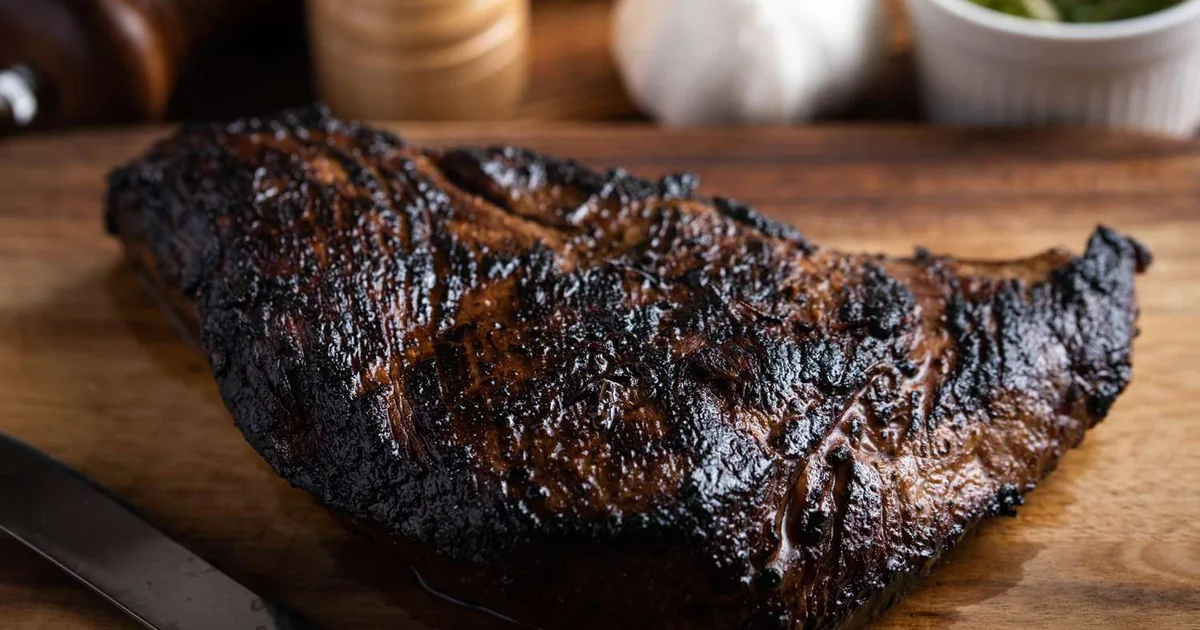
Tri-tip is naturally tender and should finish at medium-rare rather than the temperatures used for brisket. Smoke it slowly, then sear it over high heat for a browned crust around a rosy center.
Why tri-tip is cooked differently from brisket or pork butt
Tri-tip is a small, tender roast, closer in texture to a steak than to brisket or pork butt. It has none of the connective tissue that needs hours of low heat to break down, so treating it like a low-and-slow cut and cooking it to 200°F+ would just dry it out. Instead, tri-tip is smoked to a lower temperature for flavor, then seared hard for a crust, a method called reverse searing.
Venison backstrap shares that shape, a lean muscle with nothing to break down that rewards a short cook and punishes an extra hour. The smoked venison backstrap guide covers its own target and the rest that goes with it.
A holiday roast follows the same doneness logic at much larger scale. The smoked prime rib guide covers the pull targets, the per-pound timing, and the rest before carving.
The reverse-sear method
- Smoke low at 225°F until the internal temperature reaches 125 to 130°F, roughly 1.5 to 2 hours depending on size.
- Rest briefly, then move it to direct high heat, a hot grill grate or a screaming-hot pan.
- Sear hard on all sides, a couple of minutes per side, until a deep crust forms. This carryover pushes the final internal temperature up a few more degrees, typically landing around medium-rare.
The 125 to 130°F pull is a checkpoint on the way to the finish, not the number that makes the beef safe. Once the sear is done, confirm 145°F in the thickest part and rest the roast at least 3 minutes before slicing, the same whole-cut beef minimum the chart row carries.
Wood and the Santa Maria connection
Red oak or cherry are the classic pairing. Tri-tip’s best-known tradition, Santa Maria style barbecue from California’s Central Coast, grills it over red oak specifically, which is part of why red oak remains the traditional choice even off a straight smoker.
Slicing matters more than usual here
Tri-tip has a triangular shape with the grain running in two different directions across the roast. Slice against the grain, and be ready to rotate the cutting angle partway through the roast as the grain direction shifts, or you will end up with noticeably chewier slices from one end.
Common tri-tip questions
What internal temp should tri-tip be pulled at?
Pull it from the smoker at 125 to 130°F, then sear it hard over direct high heat. The sear carries the temperature up further, landing around medium-rare once rested.
Why is tri-tip cooked differently than brisket?
Tri-tip is a tender, steak-like roast with no tough connective tissue to break down, unlike brisket. It is smoked for flavor at a lower temperature, then seared for a crust, rather than cooked low and slow to a high internal temperature.
What is reverse searing?
Smoking a cut low and slow first, then finishing it with a hard sear over direct high heat at the end. It is the standard method for tri-tip and gives an evenly cooked interior with a well-developed crust.
What wood is traditional for tri-tip?
Red oak, tied to tri-tip’s Santa Maria style California tradition. Cherry is a good alternative if red oak is not available.
Related guides
Best Wood for Smoking Meat, by Cut
The wood pairing for every classic smoker cut, from post oak on brisket to alder on salmon, plus strong vs mild woods and how much to use.
Read the guide ↗Charcoal vs Gas vs Pellet vs Electric Smokers: Which Should You Buy?
Charcoal and offset give traditional flavor but need attention. Pellet grills hold steady with less tending. Choose based on how much fire-tending you want.
Read the guide ↗