
SMOKED SALMON · DONENESS GUIDE
Smoked Salmon Temperature: Internal and Pit Temp Guide
- Pit temperature
- 225°F
- Estimated cook
- 1.5–3 hrs
- Planned rest
- 5m
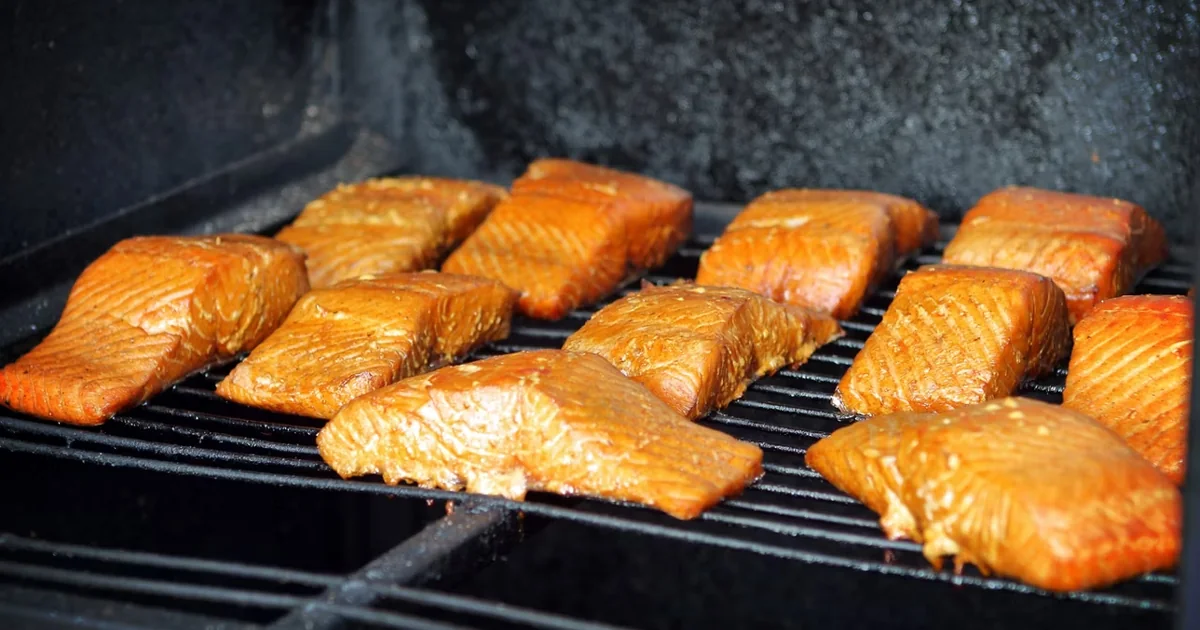
Salmon needs a shorter, hotter smoke than the large cuts in this guide. A quick dry brine seasons the fish and helps it retain moisture during the cook.
Hot-smoking vs cold-smoking
This guide covers hot-smoking, running the smoker at a real cooking temperature so the fish fully cooks through, the same category as every other cut on this site. Cold-smoking is a different process entirely, curing fish at very low temperatures (well under 100°F) over a long time without fully cooking it, the technique behind deli-style lox. The two are not interchangeable, and cold-smoking carries food-safety considerations beyond the scope of a straightforward doneness guide.
Smoked salmon temperature chart
| Target | Temperature or time |
|---|---|
| Smoker temperature | 225°F |
| Internal temperature | 145°F |
| Cook time | 1.5 to 3 hours, depending on thickness |
| Doneness check | Separates into flakes at the thickest part |
| Wood | Alder or cherry |
Doneness: 145°F and flakes cleanly
Pull hot-smoked salmon at 145°F internal, the USDA safe minimum for fish. The reliable non-thermometer check is texture: press a fork into the thickest part, and it should flake apart cleanly along the fish’s natural segments rather than looking translucent or resisting the fork.
Smoking salmon with the skin on
Leave the skin on and place the salmon skin-side down on the smoker grate. Cook to the same 145°F internal temperature as a skinless fillet. Insert the thermometer into the thickest part of the flesh; for a thin fillet, insert it from the side so the sensing tip reaches the center rather than touching the skin or grate.
Why a dry brine helps first
A short dry brine, salt and often sugar rubbed on and left for a few hours before smoking, draws out surface moisture and firms up the fish. That firmer texture holds together better through the smoke and helps the fish take on a glossy, slightly tacky surface called a pellicle, which improves both texture and how well smoke flavor adheres.
Pit temperature and timing
Run the smoker at 225°F. Timing depends heavily on fillet thickness, generally 1.5 to 3 hours. Start checking a thinner tail-end piece since it will finish well before a thick center-cut fillet. Compare salmon with the other cuts on the meat smoking temperature chart.
Wood pairing
Shrimp is the other fast seafood smoke, done at 145°F in a fraction of the time. The smoked shrimp guide covers the 15 to 30 minute window and where shrimp go wrong.
Alder is the traditional wood for salmon, a mild wood historically used in Pacific Northwest smoking. Cherry is a good alternative, similarly gentle so it complements rather than overwhelms a delicate fish. See the wood pairing guide for the full reasoning on matching wood strength to the cut.
Common smoked salmon questions
What internal temperature is smoked salmon done at?
Hot-smoked salmon is done at 145°F internal, the USDA safe minimum for fish, and should flake cleanly with a fork.
What temperature do you smoke salmon at?
Run the smoker at 225°F for hot-smoked salmon. A typical fillet takes about 1.5 to 3 hours, with thickness determining the finish time.
What is the difference between hot-smoked and cold-smoked salmon?
Hot-smoking cooks the fish through at a pit temperature such as 225°F. That is the method covered on this page. Cold-smoking is a different process: the fish stays below cooking heat and relies on a controlled cure for safety while it sits in the danger zone. You cannot make deli-style lox safely by turning down the smoker. Follow a tested curing procedure instead of borrowing the times and temperatures from this guide.
Do you need to brine salmon before smoking?
A short dry brine of salt and often sugar is common and helps firm the texture and develop a glossy surface called a pellicle, which improves smoke adhesion. It is a strong recommendation, though not strictly required.
What wood is best for smoking salmon?
Alder is the traditional choice, a mild wood historically associated with Pacific Northwest salmon smoking. Cherry is a good, similarly gentle alternative.
Sources and safety guidance
Food-safety numbers on this page come from published guidance, not from Pitwright’s own testing. Barbecue targets, timings, and technique are craft, and are described as such in the text.
- Safe Minimum Internal Temperature ChartUSDA Food Safety and Inspection ServiceMinimum safe internal temperatures: 145°F plus a 3-minute rest for whole beef, pork, and lamb; 145°F for seafood; 165°F for poultry; and label-specific ham cooking and reheating targets.
Related guides
Best Wood for Smoking Meat, by Cut
The wood pairing for every classic smoker cut, from post oak on brisket to alder on salmon, plus strong vs mild woods and how much to use.
Read the guide ↗Do You Need a Thermometer to Smoke Meat?
Yes, a thermometer is close to essential for smoking meat. Why the built-in dome gauge is not enough, and what a real thermometer gets you.
Read the guide ↗